
On Safari
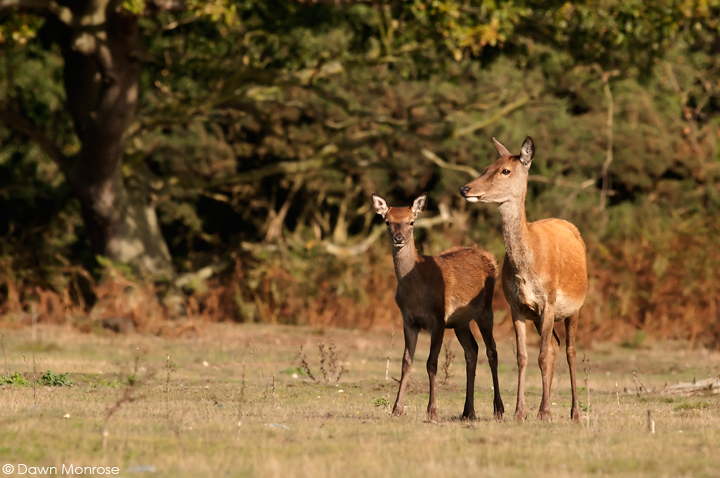
The 4×4 bounces along the rough rutted track, rounding a corner we spot the herd. 150 animals strong, they move through the pale dry grass and dust drifts in the air as one individual shakes out its coat. Ear’s flick away flies, a mother calls gently to it’s calf, there’s a roar in the distance. Where am I?
Not where you’d expect, I’m on safari with the RSPB, in deepest, darkest… Suffolk.
A Red deer safari in fact, a short bumpy ride away from the wonderful Minsmere reserve, in an area as close to ‘re-wilded’ as we’re prepared to go in this country. The Red deer here are wild, a feral population with it’s origins linked to the Thetford Forest animals, they are left to their own devices. At this time of year, all across the country the rut is taking place with the stags gathering harems of hinds, and defending them aggressively. As our largest native land mammal, this is an impressive sight.
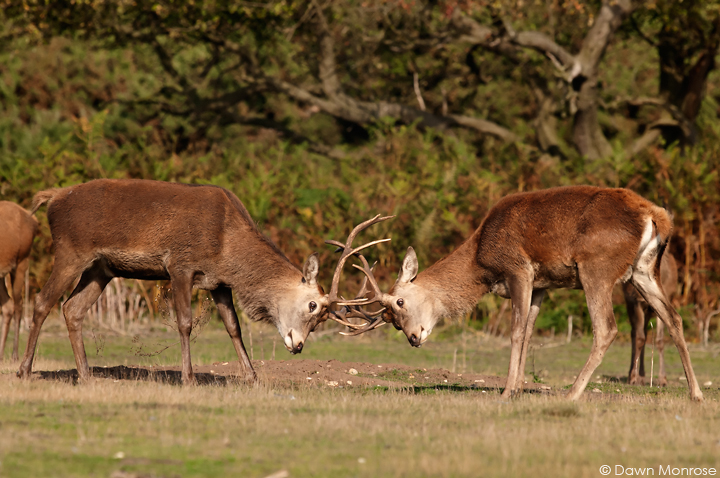
In one group, two young stags spar, carefully testing each others strength, locking antlers and pushing and shoving.
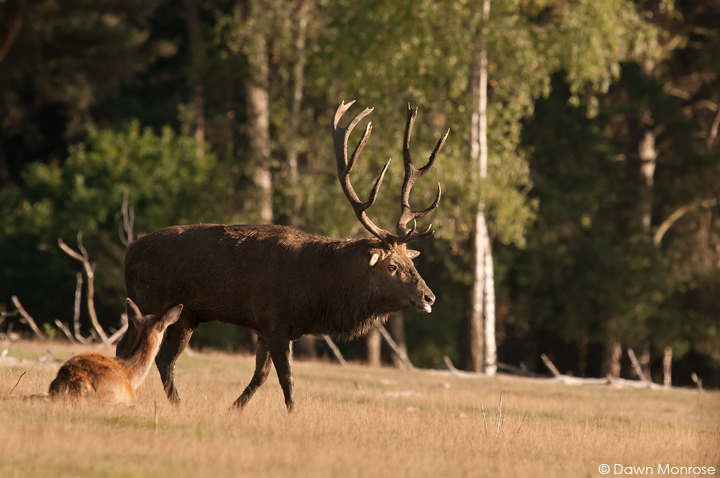
The alpha male is an impressive beast, his red coat darkened by wallowing in mud. He sticks out his tongue, tasting the air for the scent of any females in season.
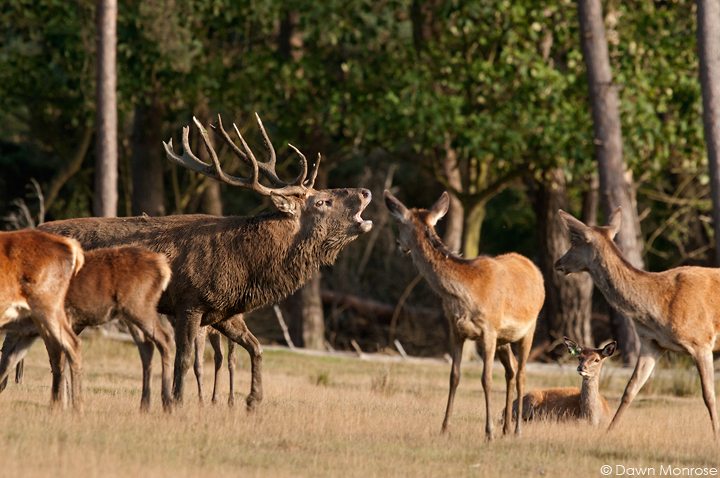
He throws his head back and roars, a deep reverberating bellow that can only truly be appreciated in person, no recording can fully capture the depth and resonance of this primaeval sound. Silence as he waits for the distant reply.
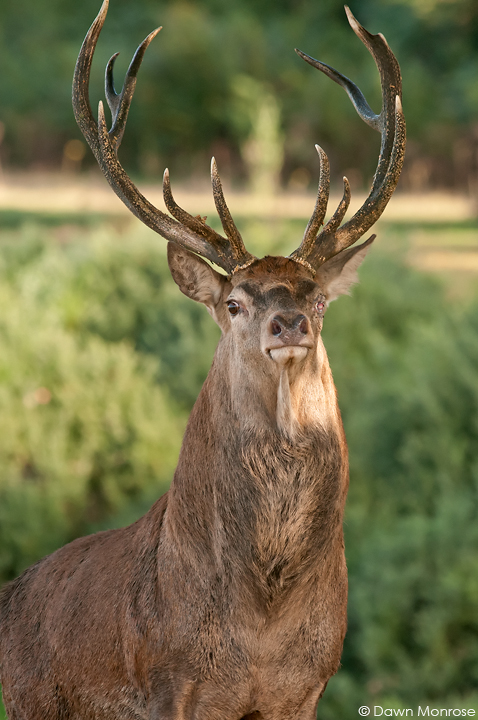
We visit the watering hole and wallow, and watch the hinds drinking and the younger stags wallowing and coating their antlers with mud. Suddenly a large stag strides though and trots purposefully up the bank towards us, there’s a moment of tension in the air as he stares at us, he’s a powerful looking beast and we wonder about his intention. He hesitates, and moves away towards the treeline. It’s only when I look at the photo afterwards I realise he’s missing an eye, a horrific injury, presumably from a previous rutting battle.
If you want to go on a deer safari with the RSPB, you can find more details here: http://www.rspb.org.uk/events/details.aspx?id=tcm:9-350001
(Click images to view larger…)
If you like what you see, please consider sharing![social_share/]

Lovely pics, glad you enjoyed it.
Great images, especially like the way the poor old battle scarred one is looking directly at us.
Your lovely photos remind me of the two wonderful safari I went on this year .Frances