Yellow and Green

Oh the exquisite British Summer, hot, sunny and humid for a week or two then back to the dreary drizzle of rain. The slugs in my garden are alarmingly huge this year, and they have eaten their way through most of my bee friendly flowers, but the little patch of Golden Rod I’ve left is still living and attracting hoverflies and honey bees like this one. Such handsome glowing golden creatures and vital pollinators.
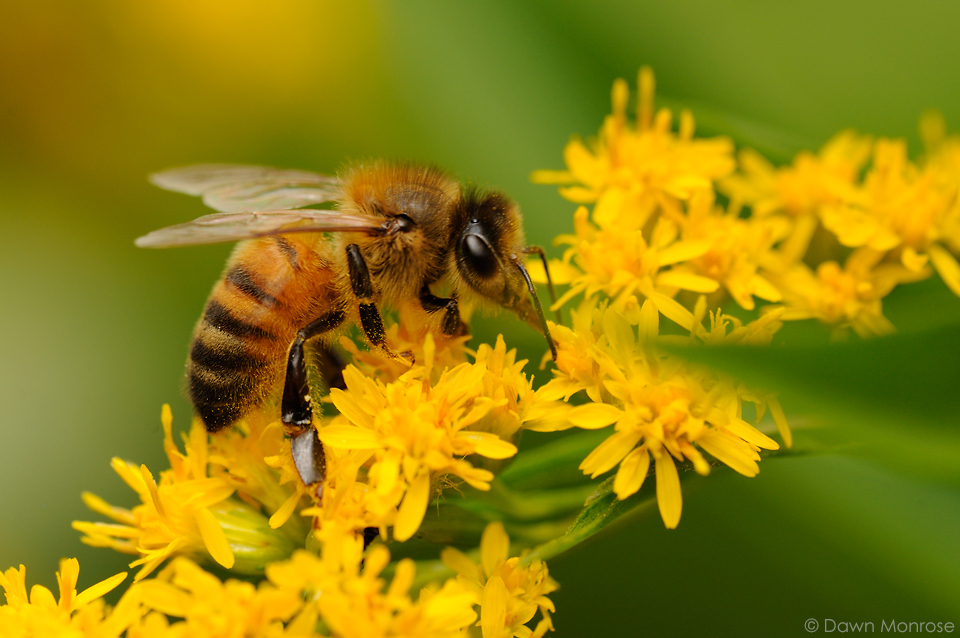
Honey bee, Apis mellifera, feeding on Golden Rod, garden, Norfolk, July, Summer

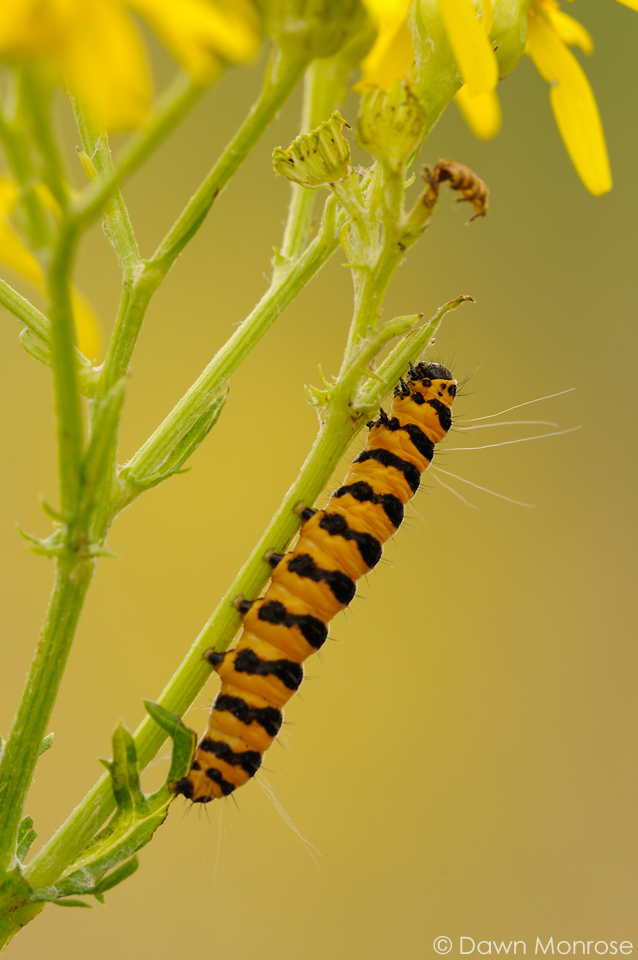
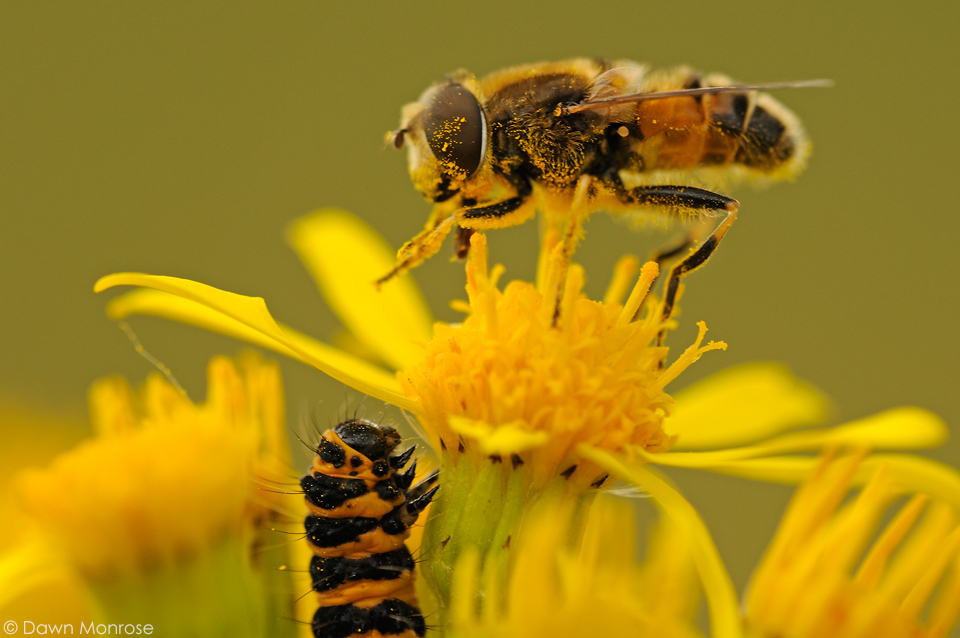
My local common has a fantastic array of wildflowers however,  perhaps the dry sandy breckland soil helps to control those slugs. Beautiful blue harebells nodding amongst the grass, tall purple flowered thistles attracting Bumblebees and the yellow suns of Ragwort glowing alongside the path. Highly toxic, Ragwort is normally pulled up, but here some is left for the marvellous Cinnabar moth caterpillars which feast upon the poisonous plant, making themselves unpalatable to predators as a method of defence. These smart caterpillars in their stripy jumpers warn of their distastefulness with their stunning black and yellow colouration.
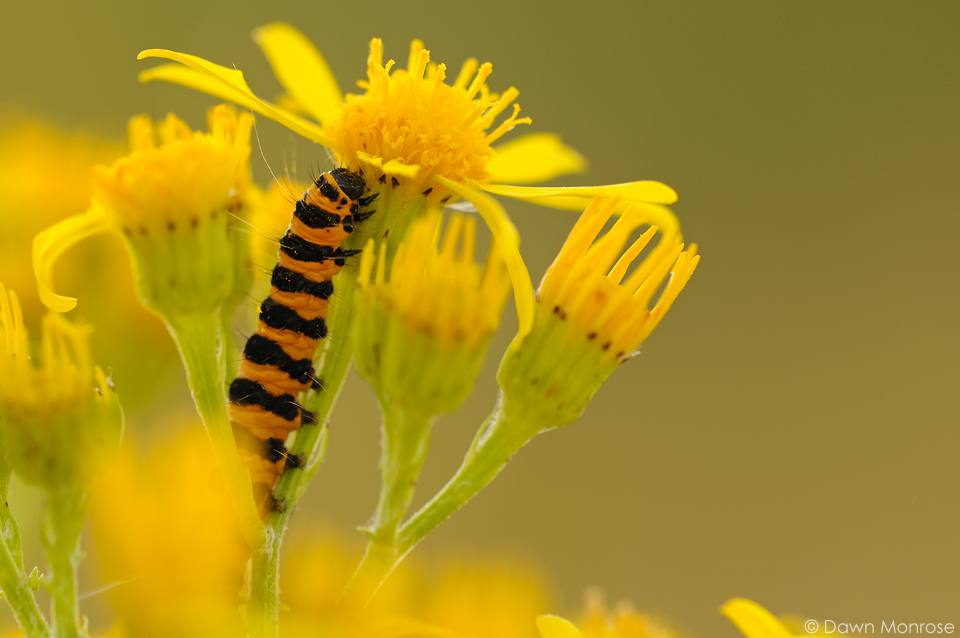
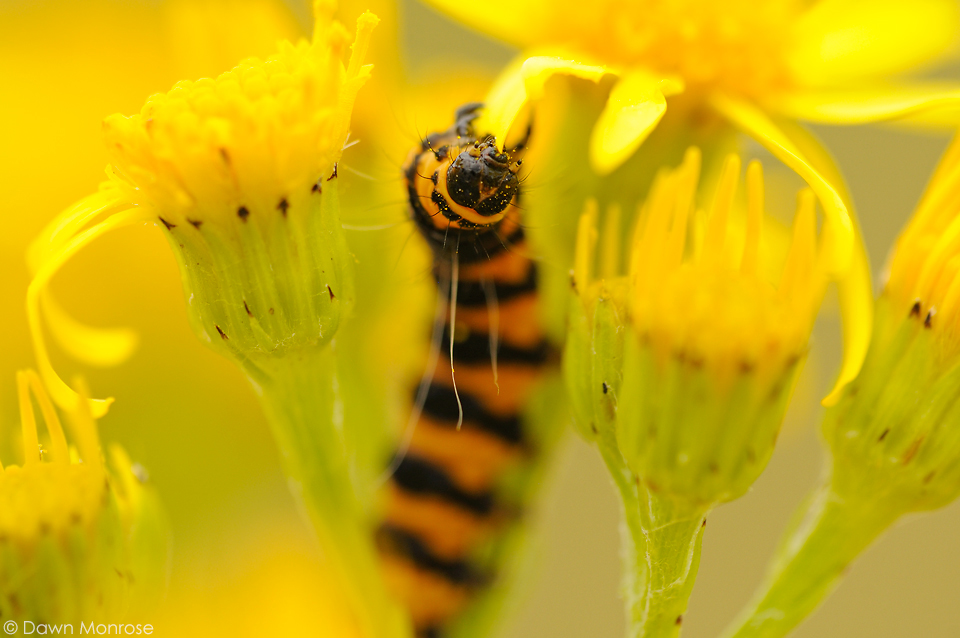
Cinnabar moth caterpillar, Tyria jacobaeae, feeding on Ragwort, Norfolk, July, Summer

Cinnabar moth caterpillar, Tyria jacobaeae, feeding on Ragwort, Norfolk, July, Summer

Cinnabar moth caterpillar, Tyria jacobaeae, feeding on Ragwort, Norfolk, July, Summer

Cinnabar moth caterpillar, Tyria jacobaeae, feeding on Ragwort, Norfolk, July, Summer, Hoverfly on flower


(Click images to view larger…)

If you like what you see, please consider sharing![social_share/]
UK & Eire Natural History Bloggers

Follow me on Facebook: https://www.facebook.com/DawnMonroseNaturePhotography

Similar Posts

  • The Month of June

    Time for a quick update, apologies for the blog silence of late. During June I took part in the Wildlife Trusts ’30 Days Wild’ project, connecting with nature every single day for a whole month. I documented my adventures right here on my website, click on this link to take a look at my: 30…

  • Footprints in the mud

    Winter is a great time for searching for tracks and signs of animals. These prints appeared in the garden recently, and setting up the remote camera showed they belonged to a rather handsome Muntjac deer. He’s a regular night time visitor now, finishing up the apple I put out for the Blackbirds. Take a look…

  • Blog catch up time

    I realise I’ve really neglected my blog recently, instead I’ve just been adding recent photos to my Facebook page, but I’ve been missing writing, so it’s time for a quick update. Since my last blog in late Summer I continued photographing the bees, and had the pleasure of photographing this beautiful Common Carder bee, a…

  • The Murmuration

    You may have noticed from my Facebook page that I have had the most amazing luck to find a Starling murmuration on my way home from work. If you’ve never witnessed a murmuration before, I strongly suggest you go and see one next Winter as it is one of the most enthralling spectacles in the…

  • Japan – Part 3

    The final part of my Japanese wildlife blog focuses on the bird life of Kyoto Imperial Palace Park. Kyoto is so different compared to the neat, reserved, business city of Tokyo, it’s more vibrant, and full of temples with little green spaces tucked in everywhere. Down by the river, Grey Herons, Little Egrets and Great…

3 Comments

Leave a Reply