
At Last
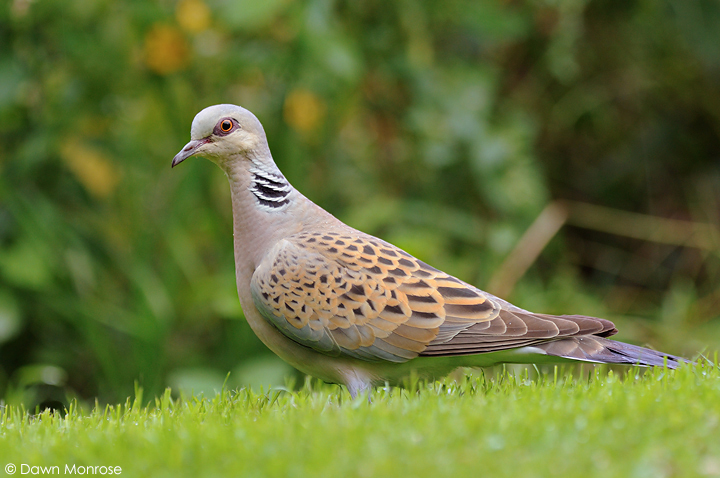
As regular readers will know, the Turtle Dove is a bird very close to my heart. It was the bird that inspired my passion for all things wild, and an equal passion for it’s conservation.
Since June, I’ve had this remarkable bird visiting the garden, but have struggled with time and light to actually get a photo. Today, well it’s a typical rainy bank holiday Monday, but for once I’m glad. For some reason, the Turtle Dove visits more frequently in wet conditions, perhaps the garden is a more comfortable place to find food on days like today.
So at last, hunkered down under my hide in the rain, Robin singing from the hedge and all legs and arms completely numb, the Turtle Dove drops down from the neighbours Walnut tree to feed on the seed I’ve scattered for it. I almost feel relived to see this bird in the viewfinder, and despite the dire lighting, I manage to get a photo.
It’s behaviour is interesting too, associating with the slightly bolder Collared Doves, but not letting it’s diminutive size stop it from getting a good meal. Frequently it pushes the larger Collared Doves off the food with a softly scolding ‘Tchoo’ noise as it hops towards them, a noise I’ve never heard before.
Soon this dainty little dove will be on his way to Africa in an incredible 5,600km migration to where he’ll spend the winter, travelling at speeds up to 60km per hour, he’ll even cross the Sahara Desert. These beautiful birds are in real trouble. The population has declined by a massive 91% since the 1970’s, and we are in real danger of losing this wonderful bird, the sound of the Summer.
For more information, and a map following the route of a satelite tracked Turtle Dove click: HERE
And of course, lots of interesting things and how everyone can help over at the Operation Turtle Dove website: HERE
(Click images to view larger…)
If you like what you see, please consider sharing![social_share/]

Follow me on Facebook: https://www.facebook.com/DawnMonroseNaturePhotography
Wh-hoo at last; well done, especially on this bleak Bank Holiday Monday. A sight to brighten up anyone’s day.
Super photo Dawn, well worth the wait – even the numb legs and arms!
Wow, Dawn what a lovely sharp picture. Glad that your patience has paid off. Well done.