
Japan – Part 1
Japan. Wonderful, mysterious, so utterly different from my cosy corner of Norfolk. I have been extremely fortunate to visit this enigmatic country recently on a family holiday, a trip of a life-time. Naturally my camera came with me, and naturally, I had to investigate the local wildlife. I’ve a lot of photos, of course, so I’ve tried to choose the most interesting ones for you in the following three part series. Today I’m bringing you photos from our first stop in Tokyo, the magnificent Imperial Palace Park.
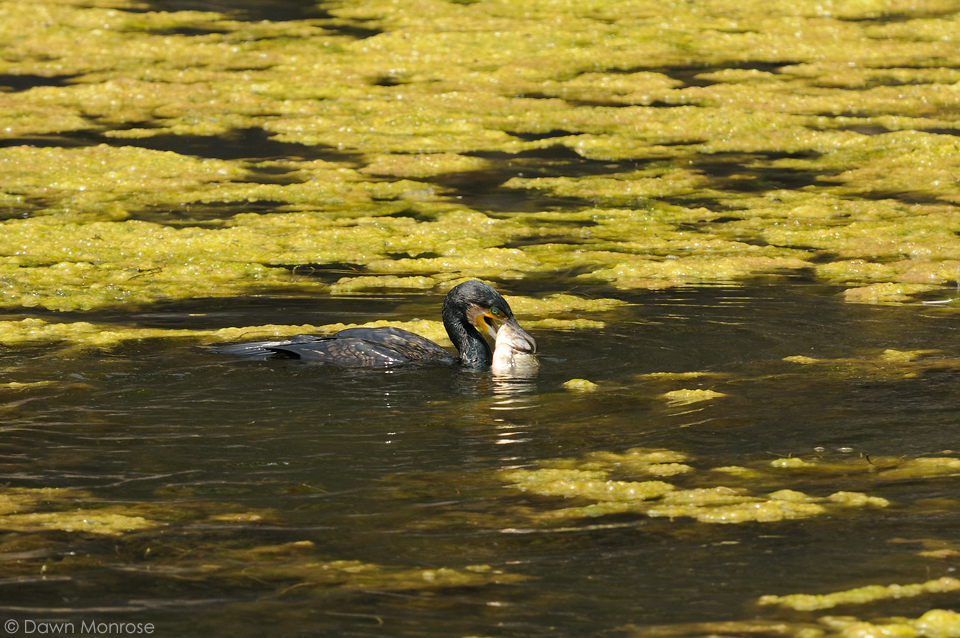
A deep moat surrounds the outer wall, and where there is water, there is life. Dabbling around in the green algae, pairs of Little Grebe’s raise their young, their whinnying call familiar and reminiscent of the fens of home, only here they live alongside the quiet hum of traffic and groups of chattering tourists. Sliding through the green water, slick and black a Cormorant chases fish. This is a Japanese Cormorant, also known as a Temminck’s Cormorant (Phalacrocorax capillatus). This one caught a huge fish, and struggled for some time to swallow it. Before it could consume it’s dinner, it strayed a little too close to a Grebe family and was chased away by the plucky little birds, loosing the fish in the process.
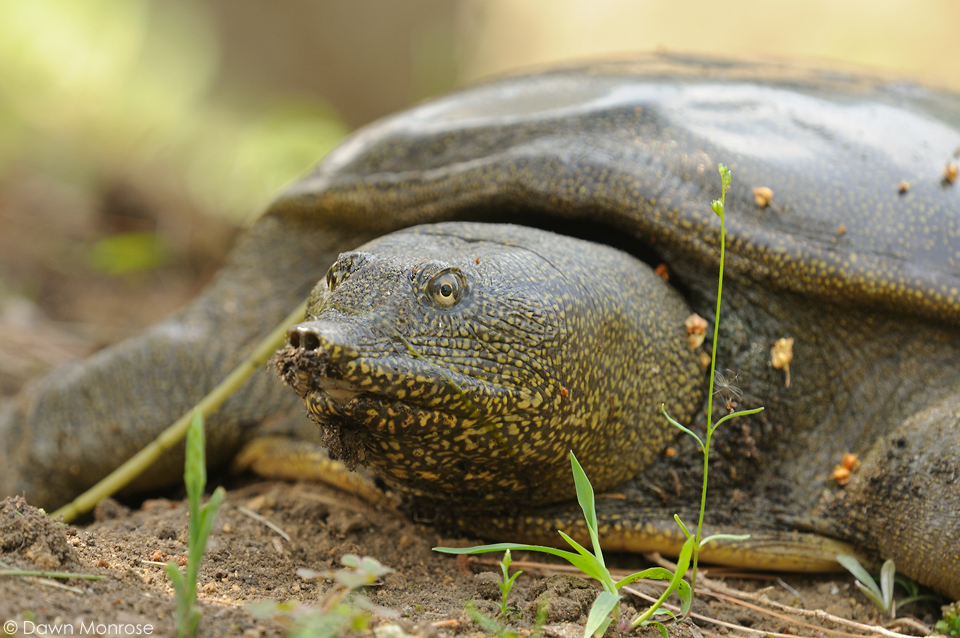
Around the edges of the moat, pond turtles lurk, basking just below the surface, or hauled out on the soft earth. It’s so odd to see these weird unfamiliar animals watching me watching them. Tucked into a gap in the moat brickwork a Black-Crowned Night Heron (Nycticorax nycticorax) waits as still as a statue, grey powder blue and beyond my camera, but a beautiful sight to see.
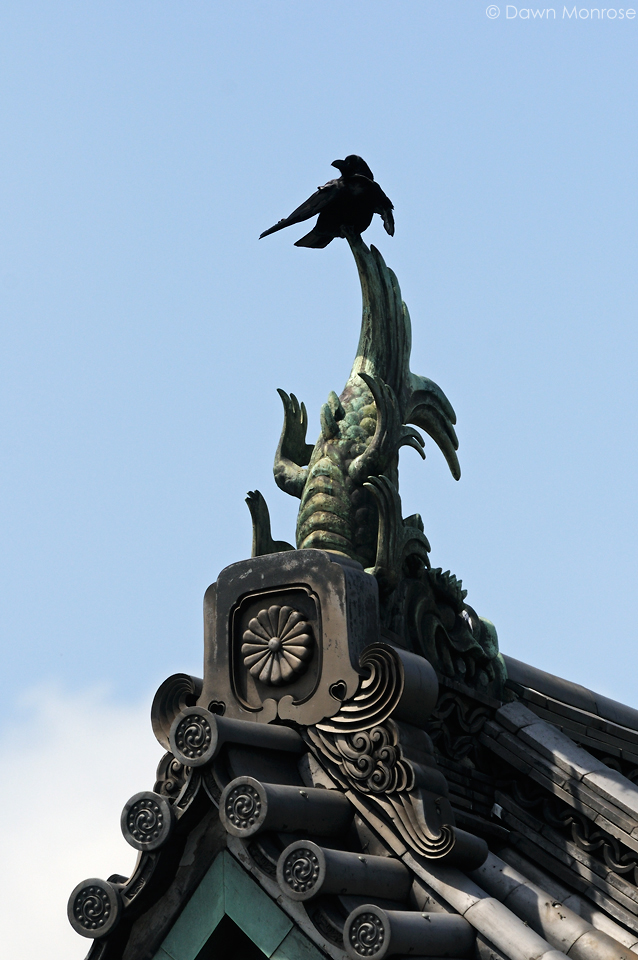
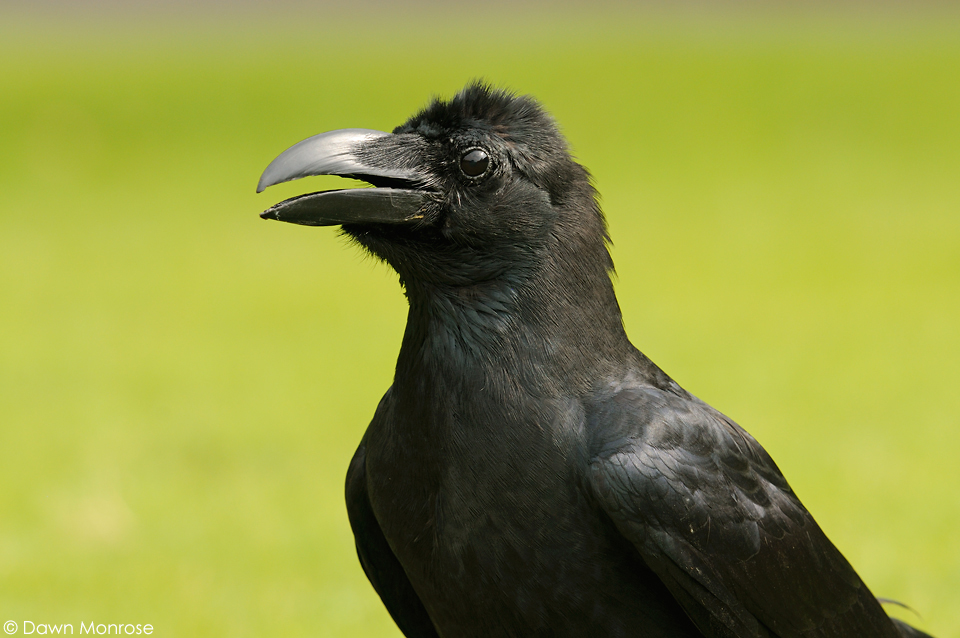
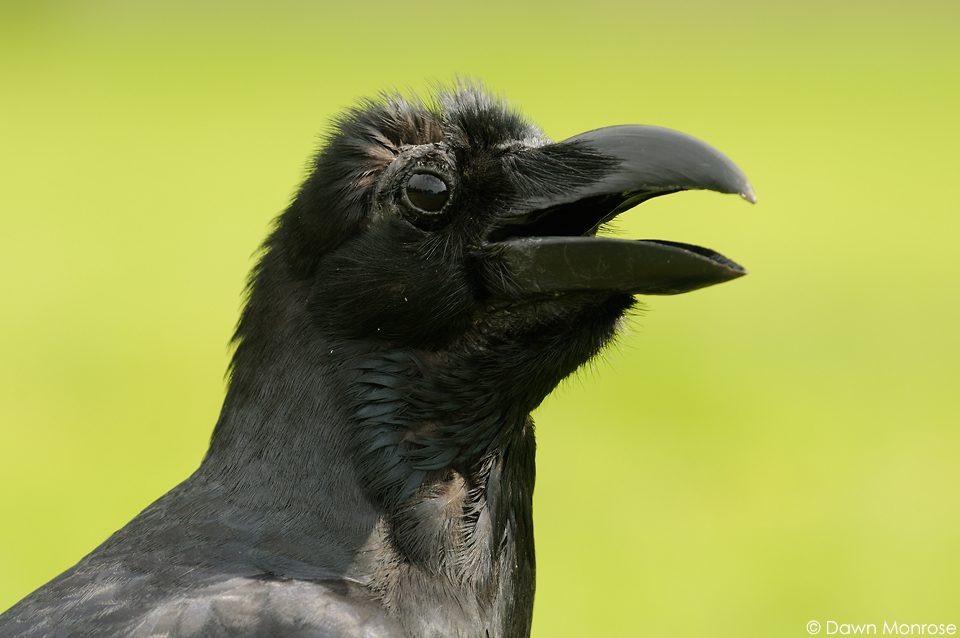
The first thing I noticed as we arrived in the humid drizzle on the first day however, was a deep and slightly sarcastic laugh – ‘Ha, Ha, Haa,’ rolling down from the towering skyscrapers in the city. This voice belonged to a huge black bird, a Large-Billed Crow, also know as a Jungle Crow, (Corvus macrorhynchos). They seemed common everywhere, adding extra decoration to the already ornate rooftops, a black statuesque finial.
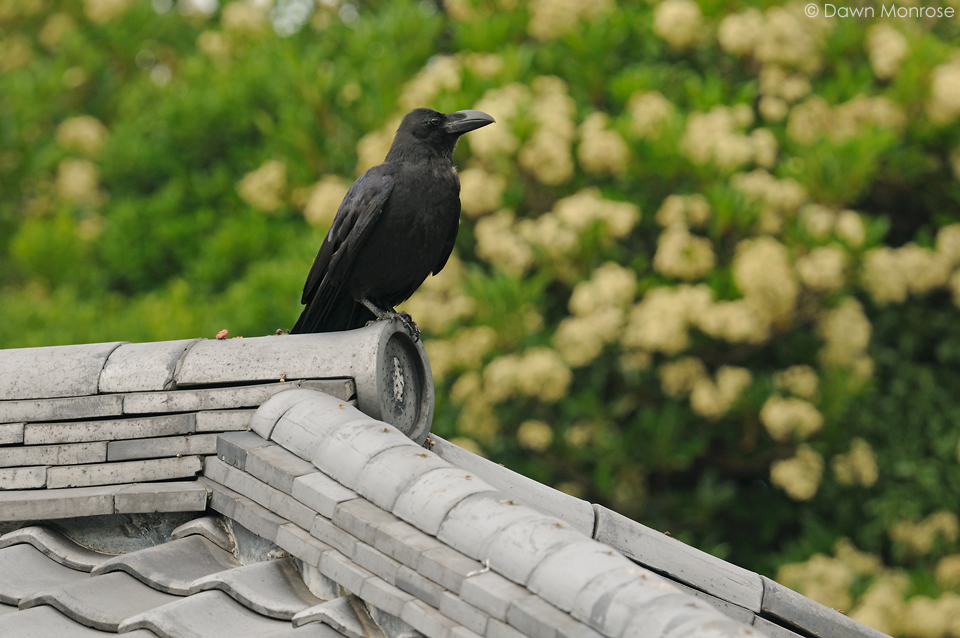
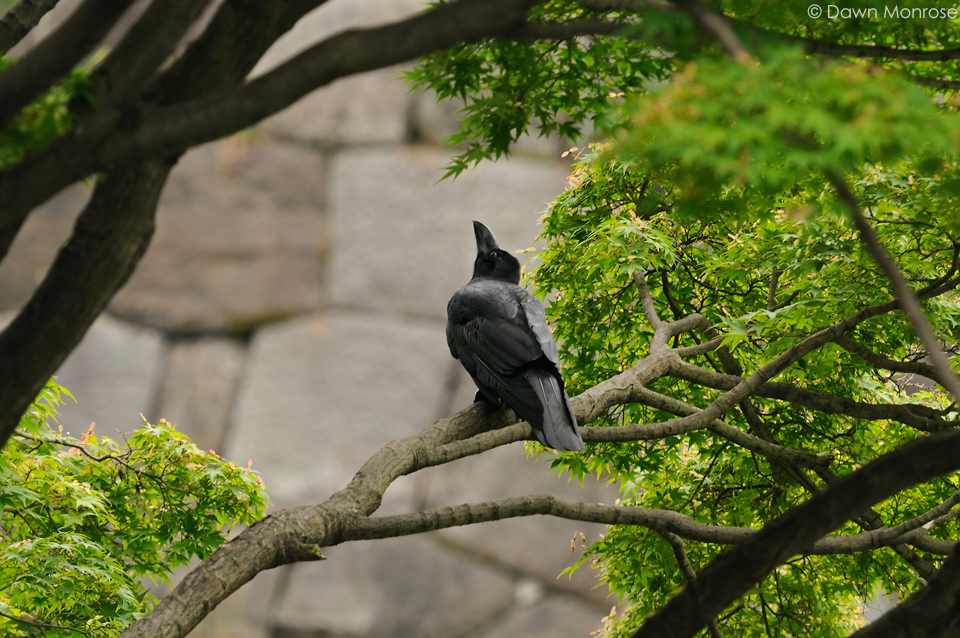
I suspect these clever birds may well be a nuisance, but I was taken with their extraordinary nature. As we sat admiring the gardens this individual came and had a closer look at us, a huge and powerful bird, with a magnificent bill. As he inspected us closely he radiated intelligence and curiosity like all crows seem to. In the bright sun you could just make out the iridescent oil of green and purple in his plumage. Just look at that beak!

Watch out for the next instalment, a cute, fluffy animal fond of harassing tourists!
(Click images to view larger…)
If you like what you see, please consider sharing![social_share/]

Follow me on Facebook: https://www.facebook.com/DawnMonroseNaturePhotography
What a captivating and engaging account – I could visualise your time at the Imeprial Palace Park as if it was a film with narration and I look forward to episode two!
Of course, I meant Imperial – I’m up too early………
Lovely to hear the first part of the story