
Japan – Part 2
The next wildlife stop on our tour of Japan was Nara, which is near Osaka, nearly 300 miles south east of Tokyo. Nara is famous for it’s very special sacred deer. They are Sika deer (Cervus nippon), and they roam freely in the town of Nara, and it’s wonderful park. As we walked up the hill towards the park a warm, musky animal scent met us, this is where the deer are. We followed our noses through the entrance and were greeted by the extraordinary sight of a Sika stag, with large antlers covered in velvet, snoozing near the temple, having his picture taken with eager selfie loving tourists. He sat patiently, quietly dozing with half closed eyes, as squirming young children were carefully placed next to him and photos snapped on cameras and phones.
You can buy deer crackers to feed to the sacred residents, and there were several stalls set up with stacks of these treats. Amazingly, the deer don’t seem to raid the stalls, but wait for people to purchase some cookies, and then gang up on them. They nip and headbutt, shoving whoever is holding the food, bullying them into dropping pieces of cracker as they flee the furry onslaught. Despite that, they are reasonably gentle for a large animal, it did cross my mind as a young stag carefully nibbled my clothes, that they could do some damage if they really wanted to. But they really are quite polite. Away from the chaos near the cracker stand, the animals are much calmer, and even bow their heads to ask for a treat. It was quite an experience to be approached by an animal, carefully considering me with deep brown eyes, bowing it’s head respectfully, and taking the cracker I offered with soft, velvet covered lips, warm whiskers gently brushing my hand.
With my long lens on my camera I was only able to capture close ups of these beautiful mammals, as they have no fear whatsoever of people.
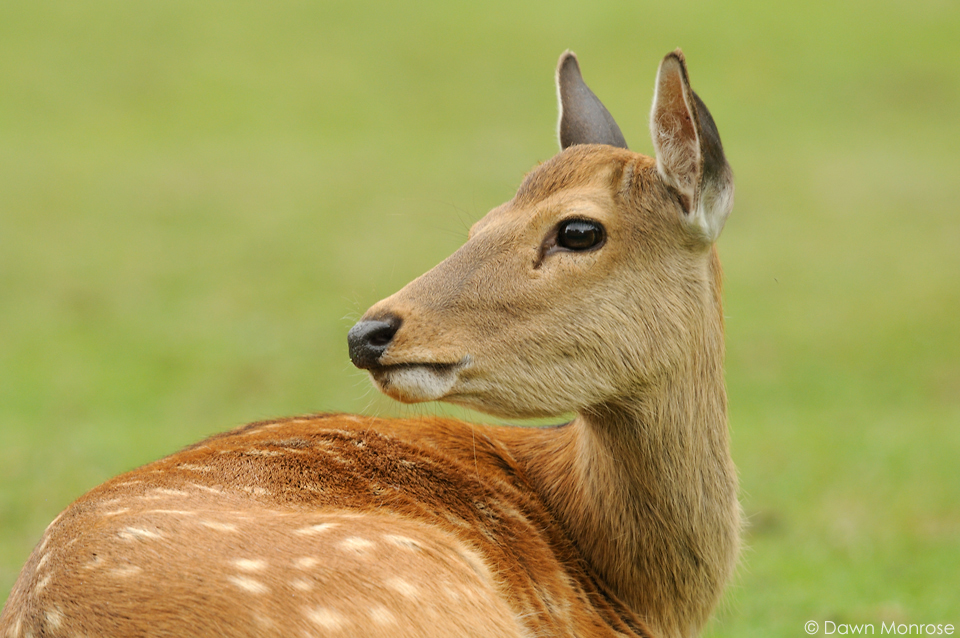
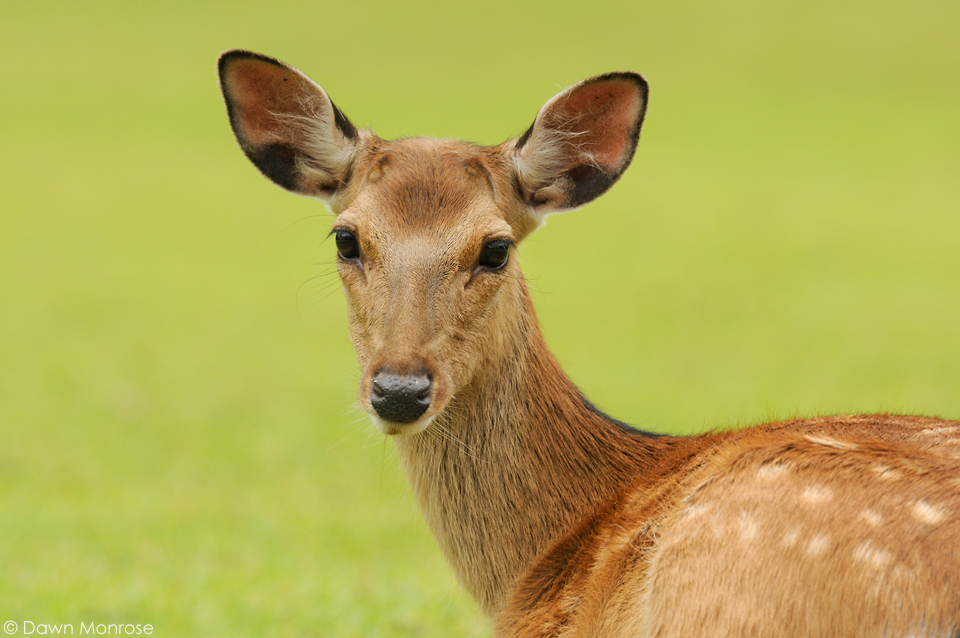

The deer seem to realise their sacred status, and as we stood waiting to cross the road, two large groups of people on either side, patiently standing, a couple of deer sauntered slowly out into the road. We all watched with great amusement as all the cars stopped to let them cross, stopping for the deer, but not for the humans!
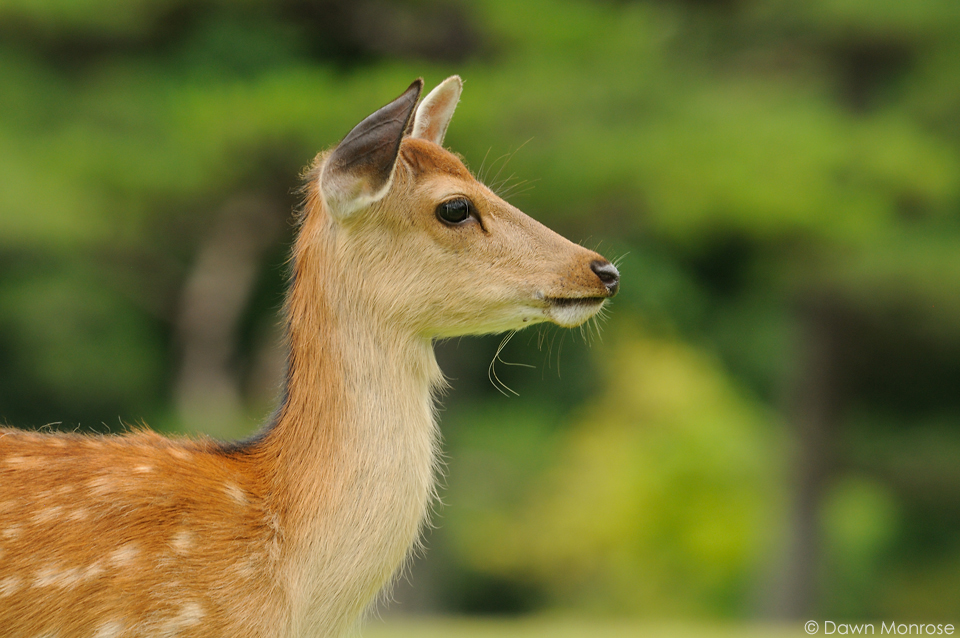
It was rather rainy, and some deer took shelter under the trees, but mostly they didn’t seem to mind the rain.
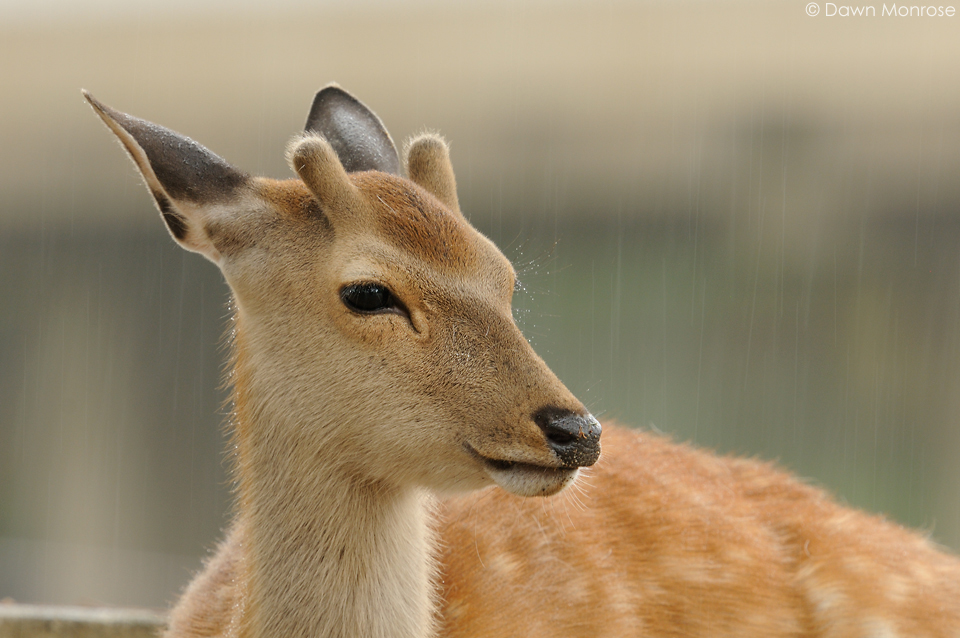
Exploring the quieter areas of the park, we found this little fawn watching from the sidelines.
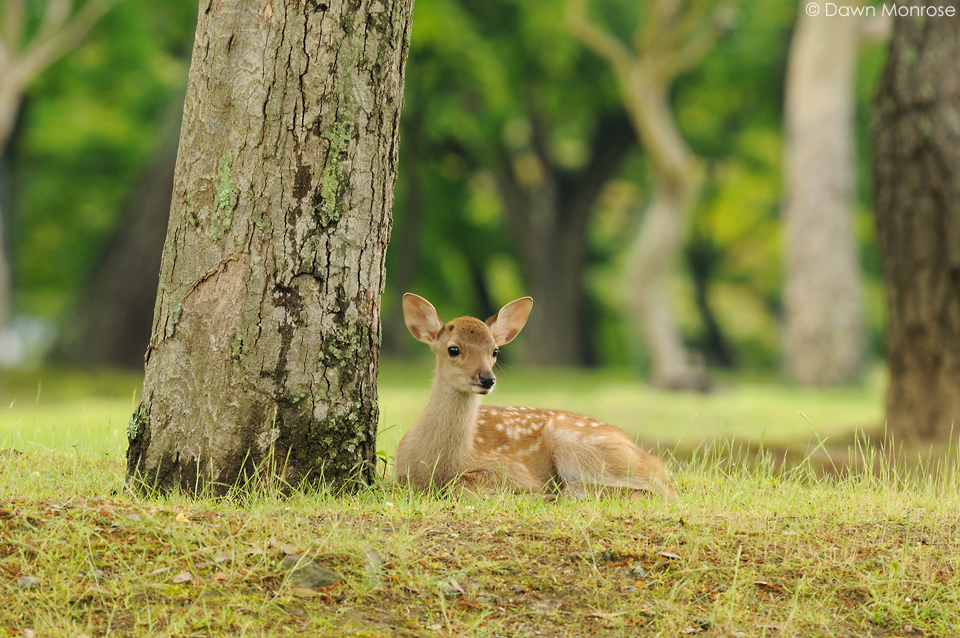
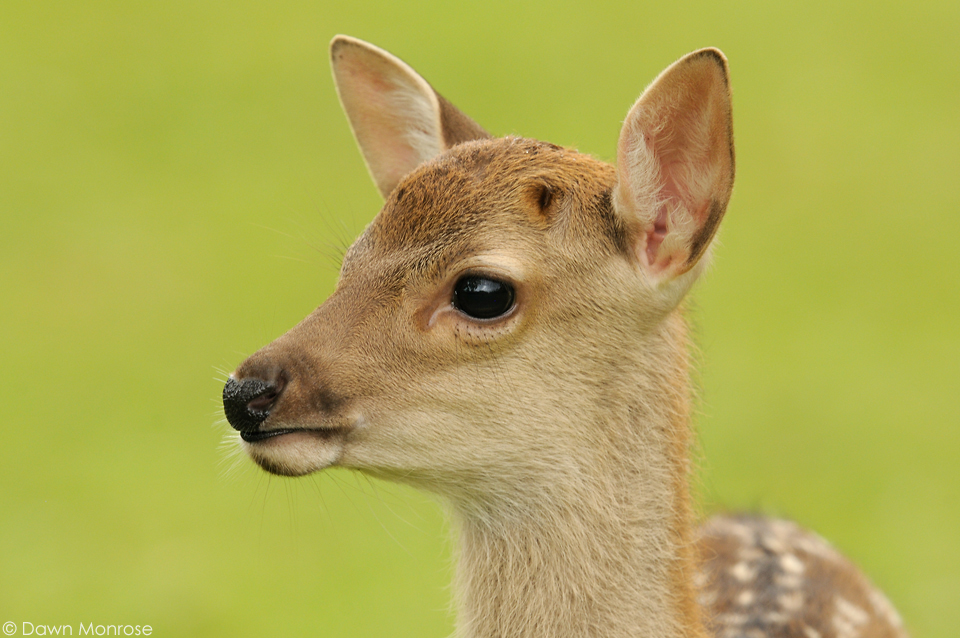
Curiosity got the better of him though, and he joined his mother to find out what all the fuss was about, although he was probably too young to try the crackers his mum was being fed.
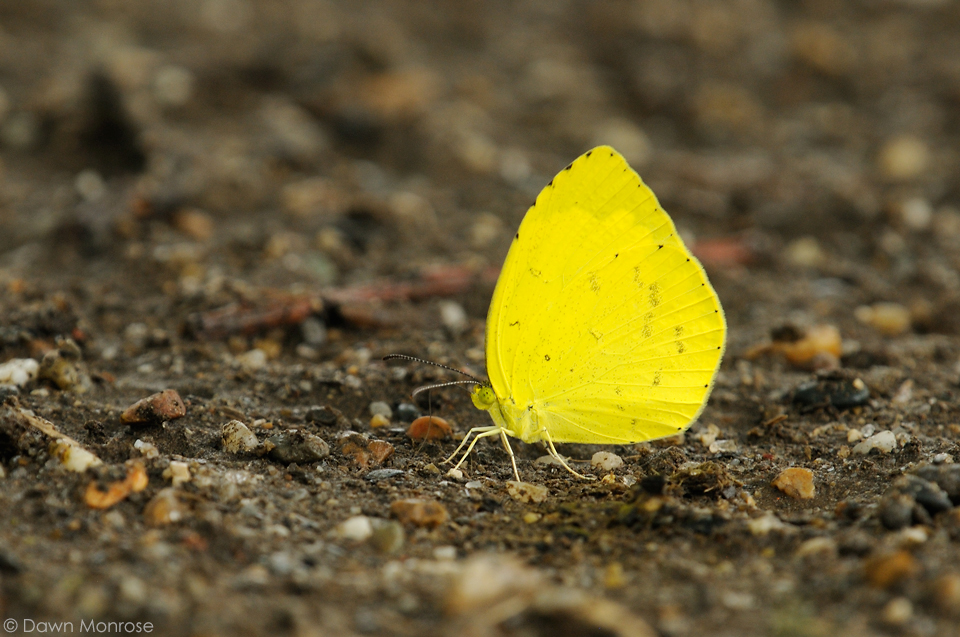
The park also had some fascinating wildlife apart from the deer, including this amazingly bright butterfly, which I think is a Common Grass Yellow (Eurema hecabe). It flitted along just above the ground, and landed frequently. It looked like it was perhaps taking minerals from the damp soil. Despite it’s intense colouring, when it landed amongst the leaf litter, it was actually quite well camouflaged, mimicking the shape and colour of the yellowing dead leaves.
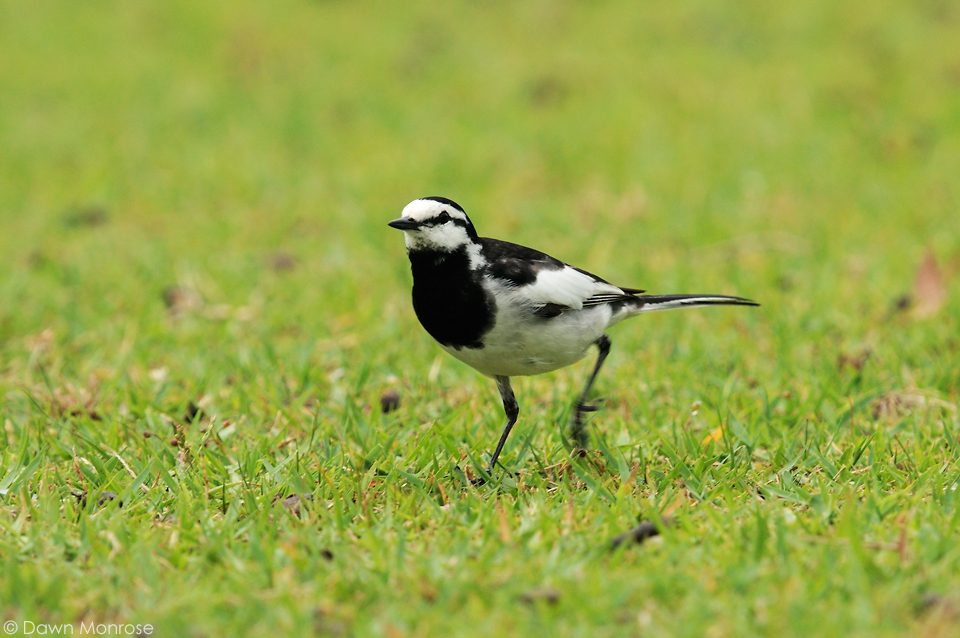
As I was photographing one of the deer, a bobbing black and white bird caught my eye as it hurried across the deer nibbled bowling green grass. It wagged it’s long tail as it chased insects over the short lawn, unmistakeably a Wagtail. This, I think, is a Black-Backed Wagtail, otherwise known as a Japanese Pied Wagtail (Motacilla alba lugens). Related to our own Pied Wagtail, and like much of the wildlife I found, so familiar, yet also wonderfully different.
Stayed tuned for part 3, for more bird life!
(Click images to view larger…)
If you like what you see, please consider sharing![social_share/]

Follow me on Facebook: https://www.facebook.com/DawnMonroseNaturePhotography
I love the pictures
So do I! – especially the second one, the fawn and the butterfly
Thank you both! 🙂