
Here and there
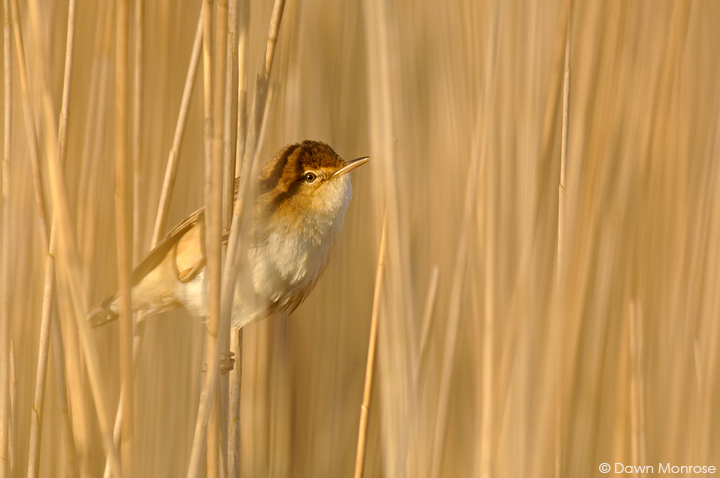
Over on the Fen first thing this morning, the Sedge Warblers were quiet again, but the Reed Warblers were singing away. Their song is softer than the harsh, scratchy tune of the Sedge Warblers, more bouncing, more musical. They were busy collecting nesting material, hopping up the reeds to choose a few strands of fluffy seedhead, then dropping them, perhaps not suitable for requirements, and then choosing a few more. Try as I might I couldn’t get any photos as they bounded around the swaying reeds. I did capture one though, peering though the reed stems at me.
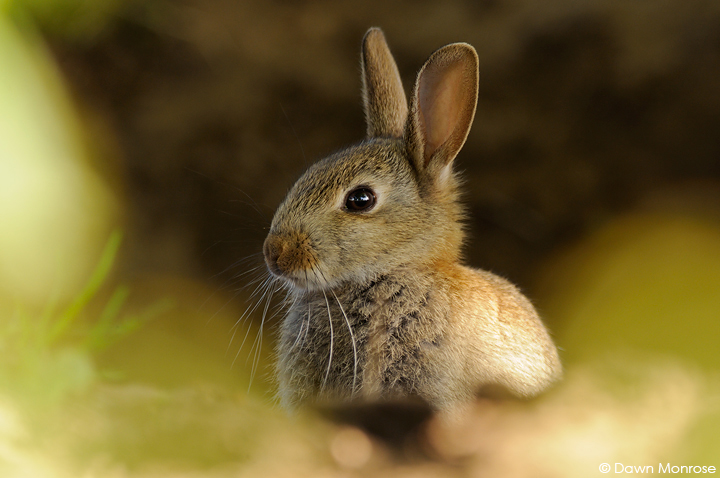
Leaving them to it, I wandered on and spotted the local Roe deer, distant, but relaxed, munching away amongst the sedges. Over on the dry fen margin, tiny young Rabbits scampered away with wide, dark eyes and trembling whiskers. This one sat at his burrow entrance calmly observing me as I tried to take his picture.
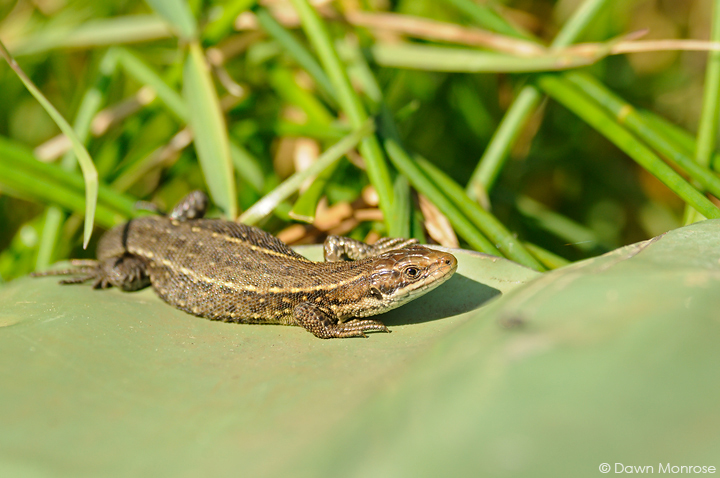
The sun was already warm and around the next corner I found a beautiful jewel of an animal, a Common Lizard. I’ve wanted to do more reptile photography, they are such fascinating creatures, what a treat to find one happy to pose in the open for me. Not the best photo in the world, far too distracting a background, but so lovely to see.
Back home, this weekend I’ve been trying to photograph some Red Mason Bees which have been making my solitary bee box home. These cute little insects with their russet red fur have been very busy, collecting pollen which they deliver to a chamber containing a single egg, before sealing the nursery with mud and repeating the process again and again until that particular bamboo burrow is filled.
I highly recommend this article which shows inside the Red Mason bee burrows and describes their life-cycle in-depth – very interesting: http://nurturing-nature.co.uk/solitary-bees-2/red-mason-bee-osmia-rufa-life-cycle-part-1/
These images are still a bit of a work in progress, I’ve not quite got the photos I want yet.
This bee is prospecting for a nest site, trying to find a hole not already occupied. They defend their nests from other bees vigorously, fascinating to watch their behaviour.
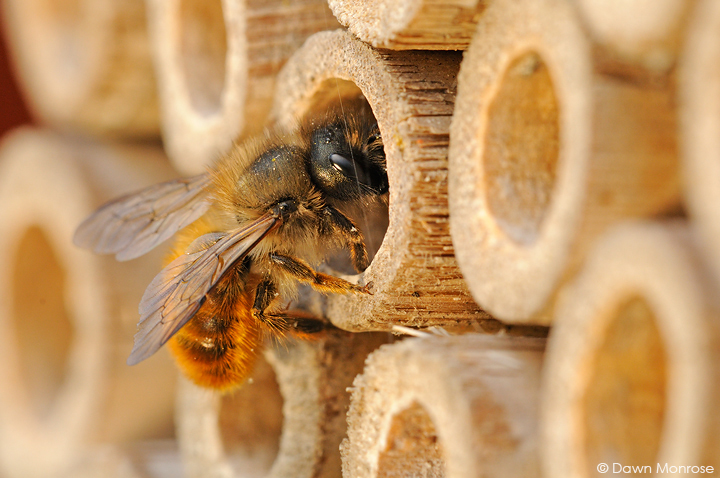
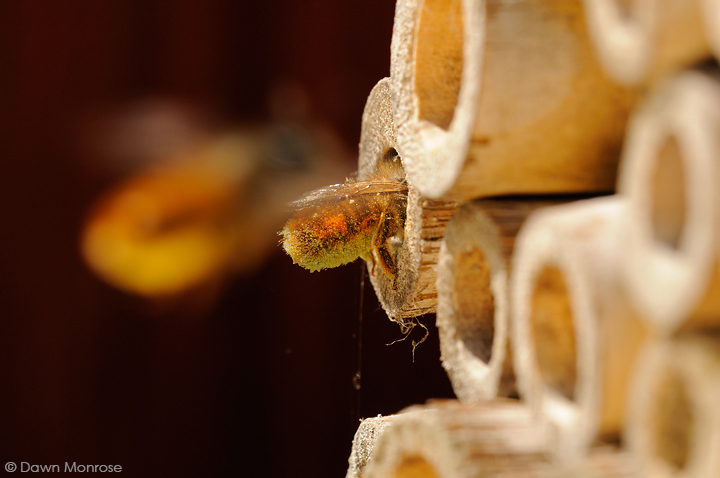
Here is a bee entering it’s nesting chamber, you can see it’s abdomen is fully laden with a load of pollen, while another bee is just flying in.
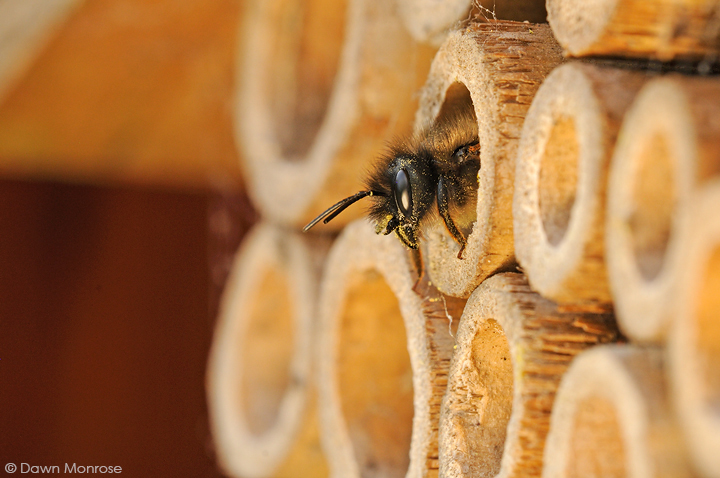
This little bee has just popped it’s head out to ward off a rival bee which had landed at the entrance.
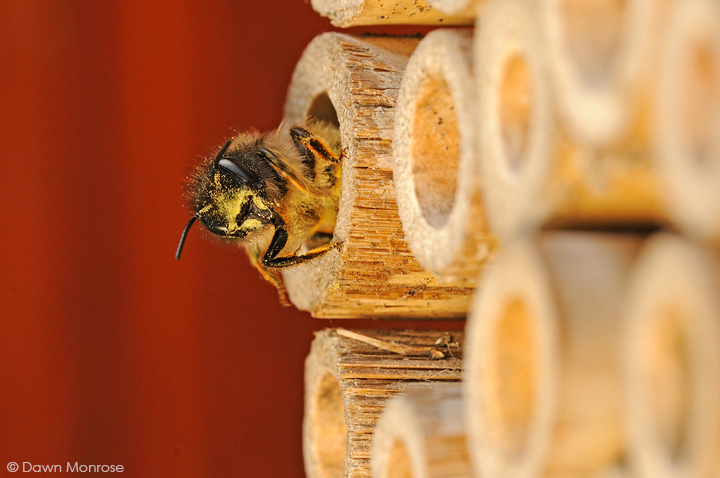
Finally, this bee is reversing into her burrow to offload all the pollen she has collected.
These bees are perfectly harmless, and incredibly fascinating to watch. As you can see from the amount of pollen they carry they are important pollinators, just like all bees. If you have a little room for a solitary bee box, simply a box filled with bamboo canes, I highly recommend installing one. A simple, yet extremely beneficial act of kindness for nature.
(Click images to view larger…)
If you like what you see, please consider sharing![social_share/]

Follow me on Facebook: https://www.facebook.com/DawnMonroseNaturePhotography
Current favourite books, click for more info:
  |   |   |
Great pics. I love the one with the Lizard, I think the background adds to it. Been looking for them for weeks but we tend to be out later. We had an interesting Bee yesterday; an Amber Mining Bee, a relative of your Red Mining Bee. There’ll be a picture of it on the blog when I get round to doing it. Glad you managed to get out
Really nice clear photos! Nice clear article! Cheers, George
Exquisite photos Dawn, love the bee ones especially.
Thanks all, much appreciated!
Thanks Rob, The lizards are tricky to spot normally aren’t they. They’re smaller than you think, and very well camouflaged, especially when they’re sitting still!
Glad you like the photos George, thanks for looking!
Thanks again,
Dawn.