Bempton Cliffs
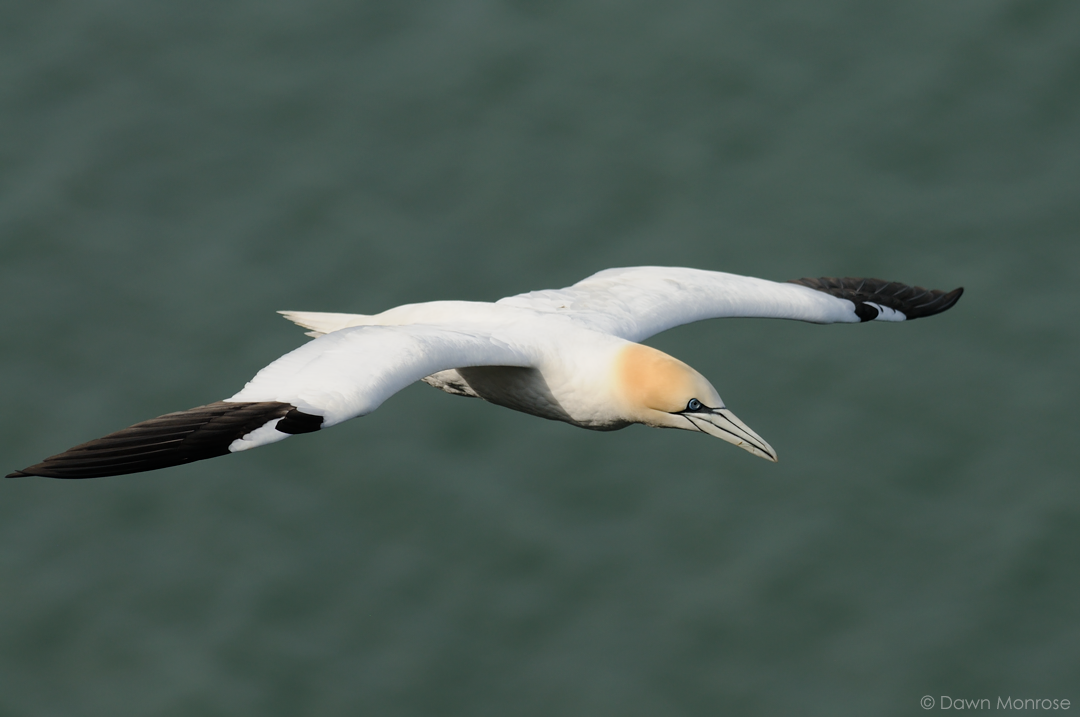
I have only ever visited Bempton out of season, when the Gannets still swoop and soar, but not much else is around. Trips to the rugged, windswept cliff tops have caused both sunburn and a soaking on previous occasions. From May the area is a seabird city, with half a million nesting birds. The Gannets are the real stars of the show, huge prehistoric looking birds, white and shining against the sea below with creamy, golden necks and startling blue eyes. They really are incredible to watch as they glide past so closely and then curl away over the water.
As we walked along the cliff top path, we found the noisiest birds were actually the Kittiwakes, delicate little gulls with ink tipped wings, constantly shouting their name, over and over again. We watched a group gathering nesting material, tugging at the grasses and returning to the cliff.
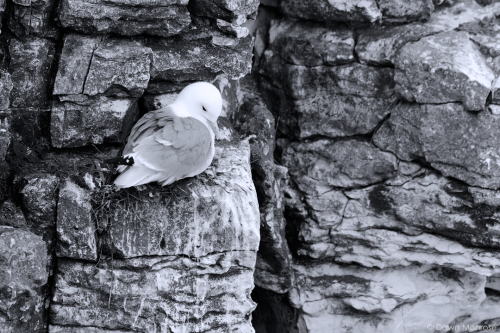
The cliffs are an ideal place to nest for many different seabirds, safe from predators, although slightly precarious.
The Razorbills were one of my favourites, smart black and white birds, with plush plumage and a mean looking bill. They have a striking bright yellow maw, curiously similar in colour to the lichens growing on the surrounding rocks.
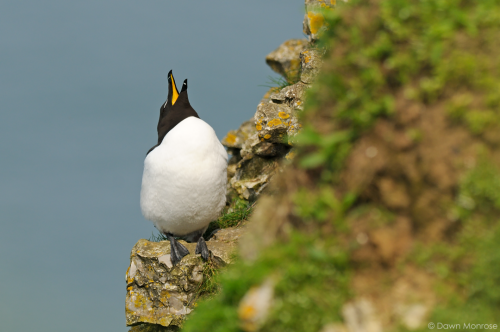
They are the only living relative of the Great Auk, a flightless seabird that became extinct in the mid-19th century. At twice the size of the Razorbill it must have been a magnificent bird.
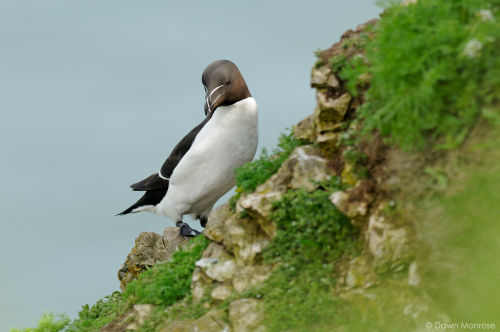
The Razorbills are hugely characterful, and were great to photograph.
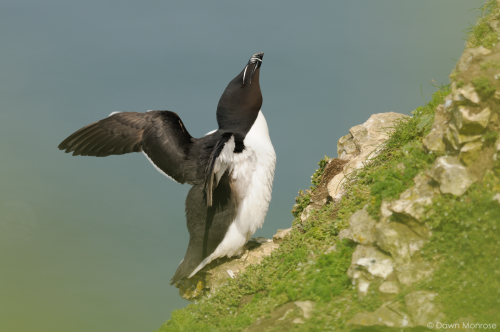
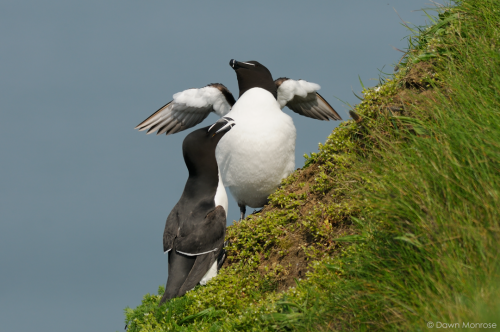
Bempton is a fantastic place to visit, whether you’re interested in photography or not, the thousands of seabirds make for a real spectacle, and it was great to see families enjoying the experience as well as seasoned birders and photographers. The Puffins were few and far between sadly, but perhaps they will be the subject of a future trip…