
Finally
Those who have followed my blog for sometime will remember that last year our garden was graced by the presence of a pair of Turtle doves. This year, as May approached, I waited with baited breath to see if they would return. They did, only to leave again for a while, perhaps just passing through. A few weeks later another returned, and we have had infrequent visits ever since. Frustratingly I haven’t had the time (or good weather!) to try and photograph them, and when I have tried a bird hating neighbour often shoos all the birds away. Each to their own I suppose, but I can’t understand that attitude when a very special rarity – the Turtle dove – is visiting your garden. To me it’s a real privilege to see this bird. Anyway, I finally had a chance tonight, and after a fair wait this beauty dropped down to feed.
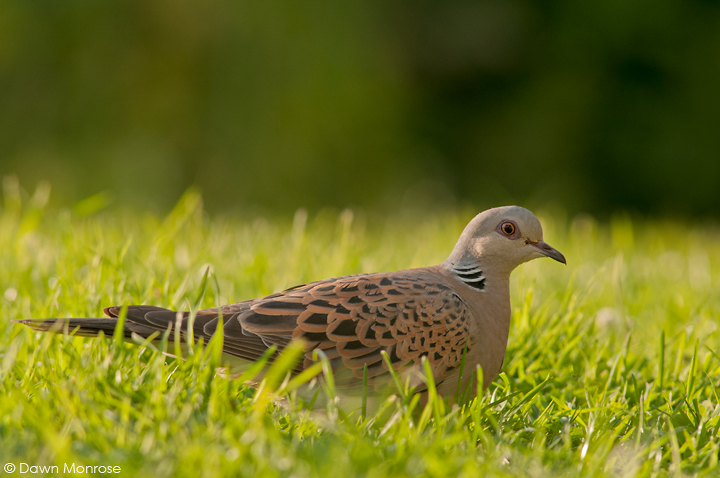
The harsh light was pretty tricky and I had to work hard for these shots, but what a treat to get this bird in the viewfinder.
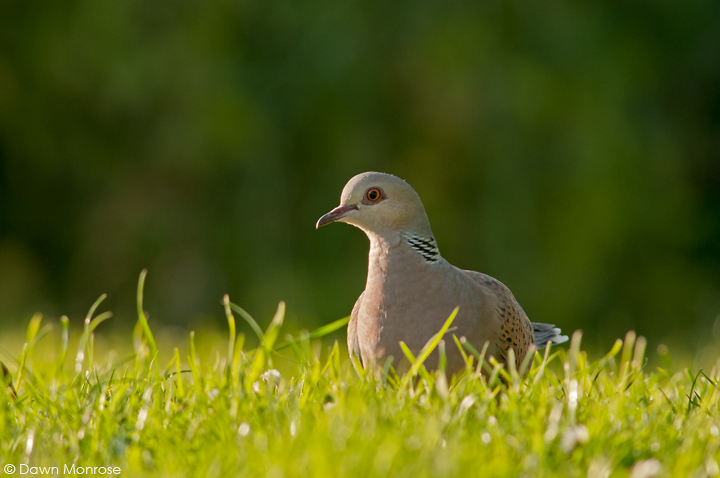
Somehow I also feel relieved, this is a bird on the brink, so to see it again means it’s still hanging on. There’s a small article in this month’s BBC Wildlife magazine on the Turtle dove, and the reality is it’s future is bleak – “the bird species most likely to become extinct in the UK over the next decade.” Could it be that my children won’t ever see a Turtle dove in the UK? The RSPB is trying hard to save this bird, but having declined by a staggering 91% over the last 40 years it’s going to be tough.
Laying there, enjoying this little birds company, a whistle of wings overhead alerted me to the approach of a Stock dove. A new bird for the garden, a pair of them have overcome their fears and are making regular visits. This one was too busy eating to even look at the camera.
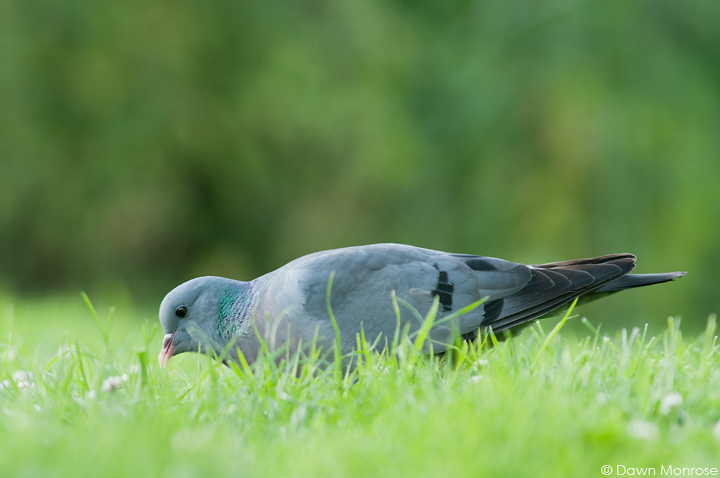
These lovely, rather shy birds seem to be doing well around here. From a distance they seem quite plain, but they have a beautiful slick of iridescent green and purple on their necks that makes them quite attractive up close.
Fingers crossed I’ll find the time for more Turtle dove photos…
(Click images to view larger…)
Well done, good pictures.
Thanks Rob!
🙂
Great shots – you must be very patient!
I didn’t realise they were rare – we have at least one pair in our garden in Yaxley every year (along with hordes of annoying wood pigeons of course:-)
I just checked my pictures and ours are collared doves which don’t appear to be endangered at all – forgive my ignorance do!
Thanks for your comments Nick, interestingly, Collared doves would have been considered rare 50/60 years ago, as they only came to the UK in the 1950’s.