A Very Hungry Caterpillar

Firstly, apologies again for the blog silence. A number of things have been holding me back recently, not least a bad shoulder injury. (Think: a dog, on lead, and a rabbit, with ‘Carry on dog walking’ style falling over due to the lead wrapped round my legs, all followed by a three hour visit to A & E, and you’ll get the idea.)

Much better now though, and as I was visiting the compost bin in the garden the other day, I realised there was something watching me… I did a double take in fact, as the creature perched on the plant next to the compost seemed to be watching me intently with large dark eyes. Only it wasn’t, it was quite happily munching away on the Great Willowherb, safe in the knowledge it’s olive green colouring and extraordinary markings would frighten me off. It did, but only for a few minutes as I went to grab the camera.
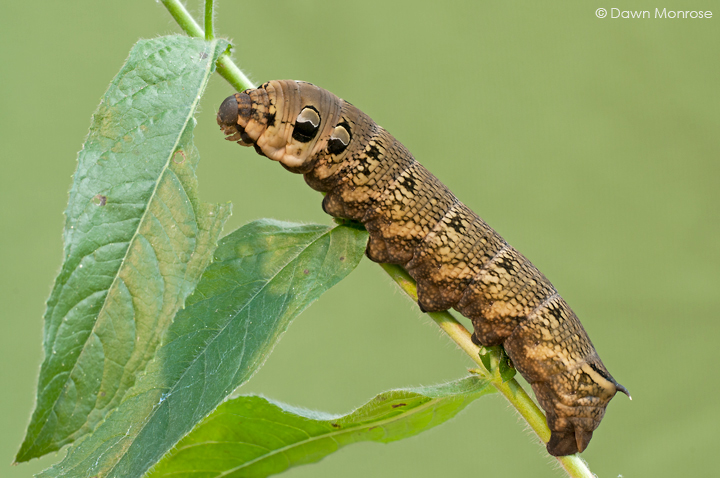
 

ElephantHawkmoth070914DM0641

This is an Elephant Hawkmoth caterpillar, a rather spectacularly large (about 8cm long) animal that will, next spring, turn into a beautiful bright pink hawkmoth that will sip nectar from the honeysuckle flowers in the hedge.

There were 5 caterpillars in all, and they have now gradually started to move away to find a safe place on or under the soil to wrap themselves in a cocoon to overwinter, before emerging as moths when the weather warms up next year.

(Click images to view larger…)

If you like what you see, please consider sharing![social_share/]

BOB_Avatar


UK & Eire Natural History Bloggers

Current favourite books, click for more info:


Similar Posts

  • Project Turtle Dove

    As I write, it’s cold and dark and the rain is dripping down the window. The grey damp chill of a British winter is a far cry away from the heat of the savannah, which is where I imagine our Turtle doves are currently enjoying hours of hot sunshine every day. They are spending the…

  • Spring Bluebells

    It’s been a few years since I last photographed Bluebells, they are such stunningly beautiful flowers, both en-mass and close up. Norfolk Wildlife Trust’s Wayland Wood is a fantastic place to see them. Spring is my favourite time of year, and Spring in a woodland is simply glorious. The first thing that greets you is…

  • Here and there

    Over on the Fen first thing this morning, the Sedge Warblers were quiet again, but the Reed Warblers were singing away. Their song is softer than the harsh, scratchy tune of the Sedge Warblers, more bouncing, more musical. They were busy collecting nesting material, hopping up the reeds to choose a few strands of fluffy…

  • Feelin so Bohemian like you…

    The tinkling bell like trill, the punk rocker hairstyle and attitude to match, it can only mean one thing – the Scandinavians are here! The Bohemian Waxwing (Bombycilla garrulus) is native to Northern Europe and during the winter may migrate southwards if the berry crop – the Waxwing’s main winter food source, runs low. This year…

  • Snow Buntings

    Had a day off yesterday, so decided to head up to the coast. Saw my first ever Snow Buntings! Brilliant! We saw the Snow Buntings as soon as we arrived, but they were quite flighty and disappeared for a while as there were a few dogs around. There were already some other photographers around, so…

  • Sedge Warbler

    Here’s a few Sedge Warbler photos from this morning on the Fen.         The adults were being kept busy by the newly fledged youngsters scattered throughout the reedbed, their wheezy cries coming from deep within the vegetation begging for yet more food.   (Click images to view larger…) If you like what…

3 Comments

  1. Great photo Dawn (wish I could get such clear shots as that!). Funny how some of the best things we see start out as just out of the corner of our eyes as opposed to actually looking for something.

Leave a Reply