
Spring on the Fen
Spring has sprung down on the fen, as the sun rises in the cold morning air, I’m greeted by the glorious summer song of the Sedge Warbler. A mix of musical trills and warbles, mechanical rasping, sweet whistles and low purrs, combined seemingly randomly like the best jazz singers.
What wonderful medicine for the human soul to be stood, alone, in the middle of a reedbed in the sun, surrounded by birdsong and mist rising all around. The air filled with the energetic rhythm of singing Sedge Warblers, the silvery notes of the Blackcap (my favourite!), Whitethroat, Chiff Chaff, Reed Bunting, the winnowing call of the Little Grebe and the haunting echo of the Cuckoo, layers of sound in the stillness of the morning.
I enjoy photographing Sedge Warblers, though frustrating at times as they have a habit of singing low down in cover, they pop their heads up now and again, sometimes allowing a few photos.
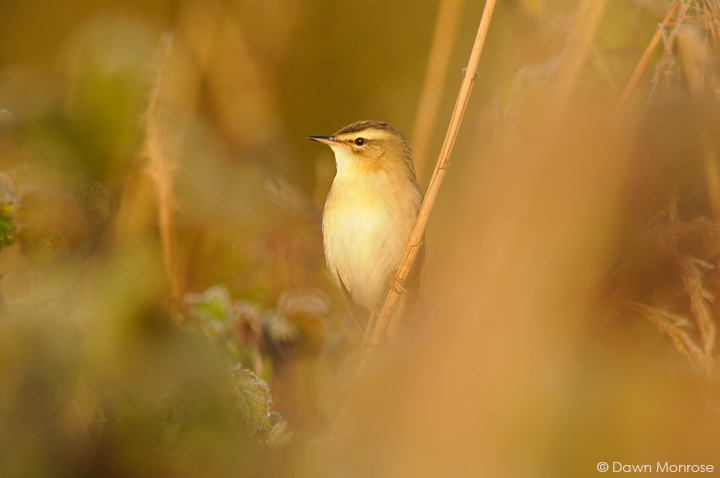
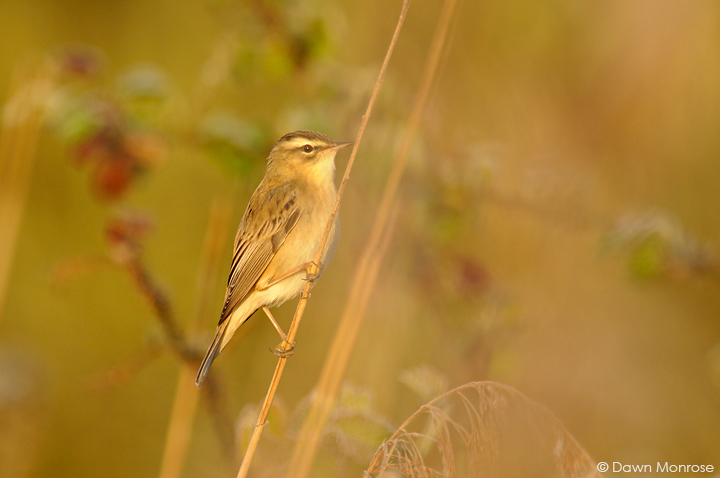
Whilst listening to the warblers, I watch a pair of Whitethroats gathering nesting material from amongst the reed stems, one hops up into the open singing it’s plain but sweet song.
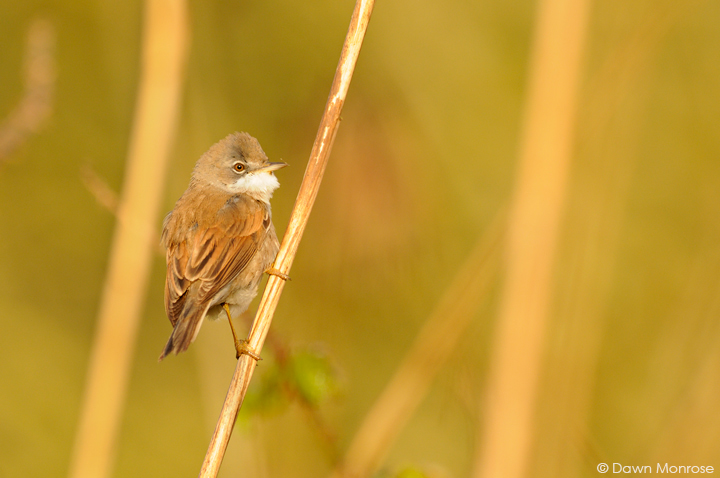
Walking onward, through the quickly melting early morning frost, I spot a Kestrel gliding by and a pair of Greylag Geese flapping noisily across. Young Rabbits are playing and feeding on the drier fen margin, and adding to the birdsong a Wren peeps out of the gorse and a male Blackbird sings a simple melody from an oak tree.
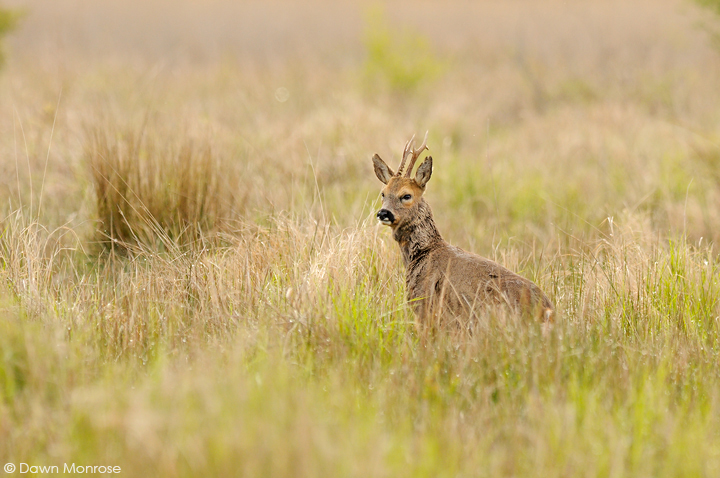
I turn to see a Roe deer buck, grazing in the damp rushes, he hasn’t noticed me yet, so I stalk closer. Another deer barks in the distance and his head comes up, ears pricked. I freeze, balancing mid step, holding my breath. His head goes down again and I stalk forward, hunched to stay below the hedge line, I make it to the cover of a wide tree trunk. Peeping round it, I can see he’s still calmly nibbling, and I have the privilege of watching him for the next 20 minutes or so. He munches a few leaves, has a scratch, shakes out his coat, then rubs his antlers against a sapling, sniffing and scent marking as he slowly moves further away. Wonderful to watch such a normally shy creature just going about his business.
(Click images to view larger…)
If you like what you see, please consider sharing![social_share/]

Follow me on Facebook: https://www.facebook.com/DawnMonroseNaturePhotography
Current favourite books, click for more info:
  |   |   |
Great stuff. I’ve yet to see a Sedge Warbler at all and I haven’t seen a Whitethroat at all yet. Good to see you back in the field. Look forward to seeing more.