
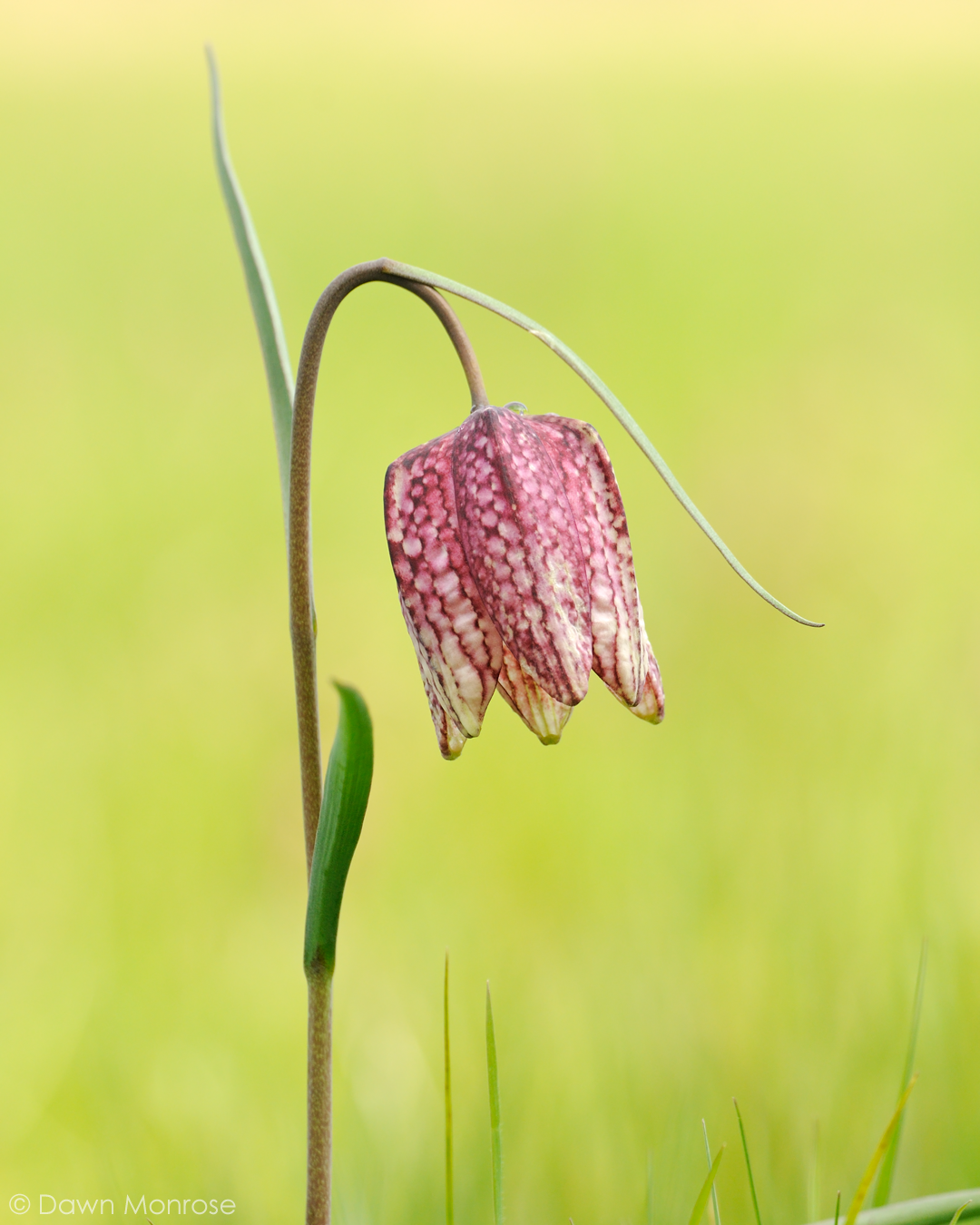
Fascinating Fritillaries
Hello. I’m blogging again. Well, don’t expect regular updates, but I felt like writing again, and wanted to try and document some of my photo trips this year.
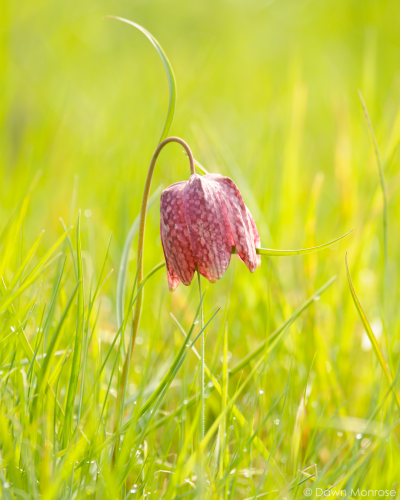
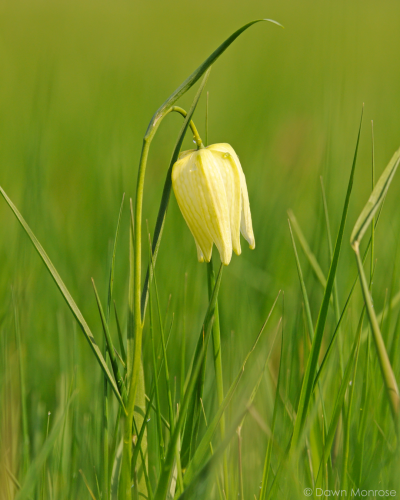
I invited my lovely mum to join me for one of my first trips out with the camera, because I hoped this was a sight she would like to see too. So I drove us to a rather damp field in Suffolk. We slipped and squelched our way down to the meadow, and the sight before us was certainly worth it. The field was full of gently nodding Snake’s-head fritillaries, the chequered purple dome of each flower glowing as the clouds gave way to gentle spring sunshine.
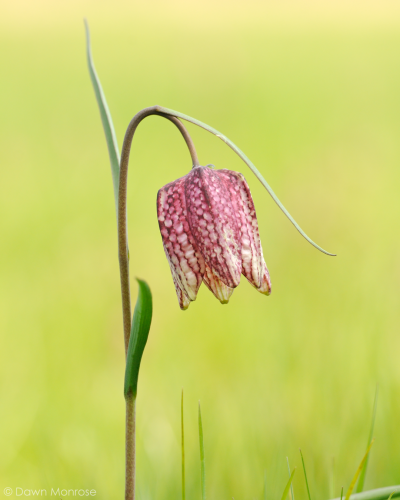
The Snake’s-head fritillary is a native species, our only native fritillary species, and once so common that it was sold in bunches in Covent Garden, having been plucked from the local meadows. Now however, the species is classified as vulnerable on the plant red data list for Great Britian, and is found in just a few sites in the South and the Midlands. The fritillary favours meadows which flood in winter, and as with many of our declining species changes in land use has been the cause of their downfall, with sites lost due to drainage or ploughing. Luckily some areas have been preserved and well cared for, and at one site in Oxford these stunning little flowers have even made a spectacular comeback thanks to careful management.
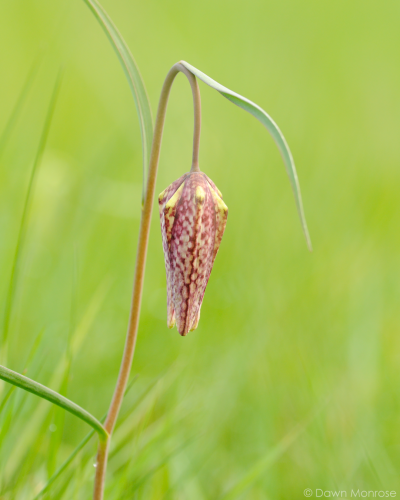
The rounded pendulous flowers at first don’t give much of a clue for the origin of the name of these plants, but if you find an immature flower, or a bud, you can see the rather snakey appearance giving rise to the common name ‘Snake’s-head’ fritillary. The latin name is Fritillaria meleagris, meleagris meaning ‘spotted like a guineafowl’ so describing the chequered pattern of the flower.
If you’d like to see these unsual flowers there are several locations to visit, take a look here: http://www.fritillaria.org.uk/uk-sites.html
The site we visited – Fox Fritillary Meadow is owned and managed by Suffolk Wildlife Trust and is only open for one weekend during the flowering season, booking available online, and we can highly recommend the cream tea! For more info: https://www.suffolkwildlifetrust.org/foxfritillarymeadow
Please check out my Instagram account @dawnmonrosenature for more photos!