
Feelin so Bohemian like you…
The tinkling bell like trill, the punk rocker hairstyle and attitude to match, it can only mean one thing – the Scandinavians are here!
The Bohemian Waxwing (Bombycilla garrulus) is native to Northern Europe and during the winter may migrate southwards if the berry crop – the Waxwing’s main winter food source, runs low. This year they have been seen right across the country, which is unusual, as normally they only make it as far as the north and east.
I’ve seen these birds in the past, but missed out on photographing them, so it was a much longed for treat to have an opportunity today.
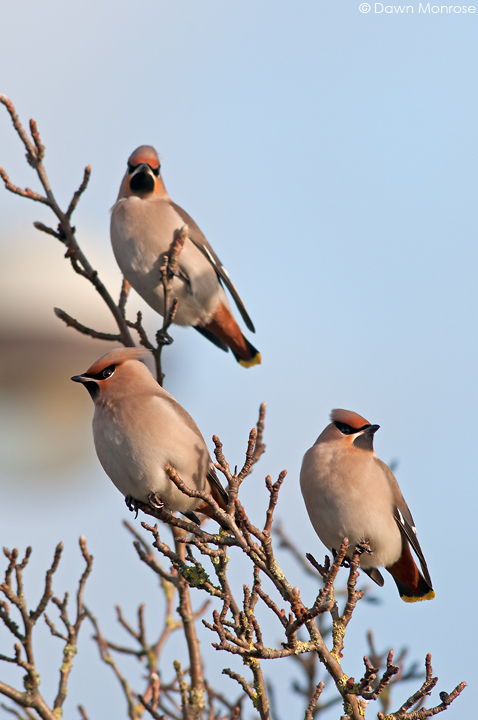
These birds have a friendly and sociable disposition and are a bit of a favourite of mine. They are easily recognisable, similar to a Starling in size, with a lovely buff colouring, black eye mask, prominent crest, a yellow tipped tail and waxy red tips to the wings – hence the name.
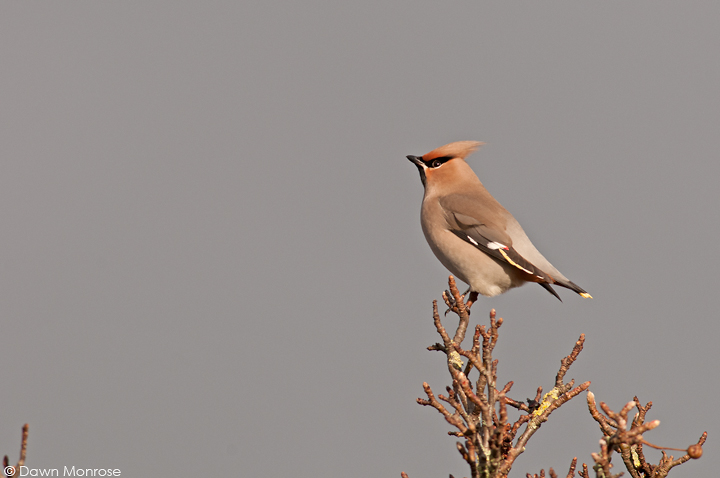
Their love of berries means the best place to see these attractive birds is your local supermarket car park – yes you hear me correctly! Supermarkets often plant Rowan trees, Hawthorn and Cotoneaster bushes around their car parks and these approachable birds are drawn to these berry rich areas. They certainly aren’t afraid of people and with a bit of care you can get very close. These photos were taken in a very busy car park in the middle of Norwich! People who know me will know I’m rather a shy sort of person, but I was amazed by the friendliness of the good people of Norwich who were genuinely interested in the birds and I found myself in conversation with numerous lovely people, waxing lyrical about Waxwings.
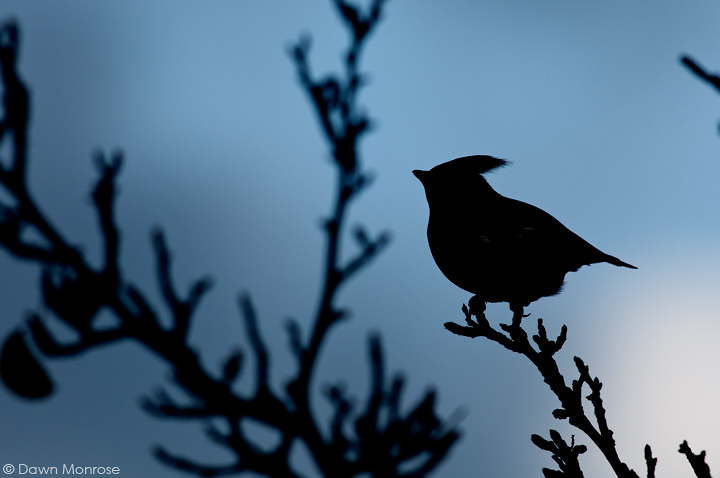
The light was decidedly changeable, and when the sun disappeared I tried something a little more artistic.
I could have stayed all day with these delightful birds, but the shopping beckoned, so I had to tear myself away. Hopefully I’ll get to photograph them again sometime soon. So keep your eyes peeled when you’re out and about, you might just spot a group of cheeky Scandinavians scrumping for berries down at the supermarket.
(Click images to view larger…)
If you like what you see, please consider sharing![social_share/]

Well done, how many were there? Birdguides reported 35 yesterday.
Thanks Rob, I counted approximately 30, they were coming down to feed on the Cotoneaster berries.