Happy New Year!

Happy New Year to you all!

Despite the grey weather today, I just had to get out with the camera – the reason? Well a lovely shiny new lens!

Now the folks who know me will know I’m not that much of a ‘gear-head’ and I’m a firm believer in that it’s not what you’ve got, it’s what you do with it that counts. So for many years I’ve been using the Nikon Nikkor 500mm f4 P lens, and in fact the majority of the photos on my website were taken with this lens. This lens was produced in 1988 (I would have been about 4 years old!) and is manual focus only, it’s a fantastic bit of glass and was the only decent 500mm lens I could afford at the time. It’s served me very well over the years, but the manual focus and resulting quantity of missed shots was often frustrating, so I’ve been long overdue for an upgrade. Enter stage right my sleek new Sigma 500m f4.5 EX APO and all the other random letters lenses seem have attached. It’s autofocus! For the wildlife photographers reading, I went for the Sigma over the Nikon for several reasons, mainly that funds wouldn’t quite stretch to the Nikon (it’s waaay more expensive than the Sigma), but the image quality compares very favourably according to the reviews and the Sigma focuses slightly closer and is more compact and lighter than it’s Nikon counterpart. The Nikon has VR (Vibration reduction) and the Sigma doesn’t, but I didn’t consider that a good reason to spend all that extra money. So I overcame my brand faithfulness and went for the Sigma.

I haven’t had much of a chance to test it out properly yet, but after a brief session in the garden with the birds I’m thoroughly chuffed with it so far! Even with the grey conditions, it focuses super quickly and quietly and is beautifully sharp. I can’t wait to get out and try it properly, but for now:
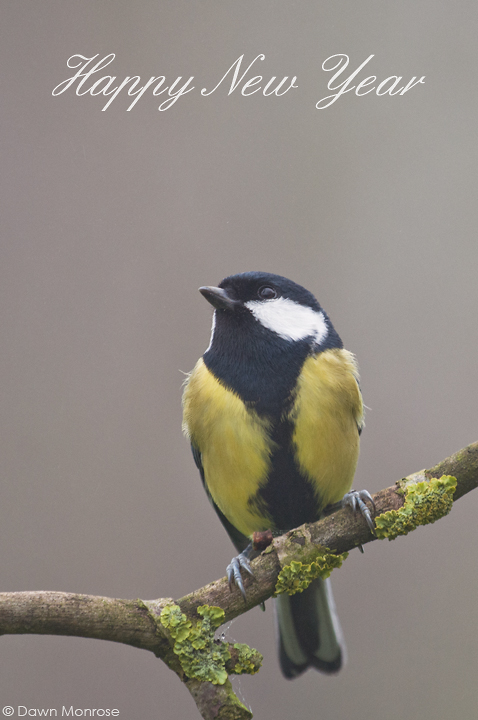
Great tit, Parus major, perched on branch with lichen, Norfolk, January

(Click images to view larger…)

If you like what you see, please consider sharing![social_share/]

UK & Eire Natural History Bloggers

Similar Posts

  • Feelin so Bohemian like you…

    The tinkling bell like trill, the punk rocker hairstyle and attitude to match, it can only mean one thing – the Scandinavians are here! The Bohemian Waxwing (Bombycilla garrulus) is native to Northern Europe and during the winter may migrate southwards if the berry crop – the Waxwing’s main winter food source, runs low. This year…

  • Operation Turtle Dove

    Regular readers will know I have a real passion for this wonderful rare bird. I’ve just heard about Operation Turtle Dove – a three year project to reverse the decline of the Turtle dove. The project is a partnership between the RSPB, Pensthorpe Conservation Trust, Natural England, and Conservation Grade. For more information visit their…

  • Here and there

    Over on the Fen first thing this morning, the Sedge Warblers were quiet again, but the Reed Warblers were singing away. Their song is softer than the harsh, scratchy tune of the Sedge Warblers, more bouncing, more musical. They were busy collecting nesting material, hopping up the reeds to choose a few strands of fluffy…

  • Sedge Warbler

    Out on the Fen again this morning, a lovely sunny start, but a little frosty too. Starting to get there with the Sedge Warbler’s I think. They seemed a little quiet, perhaps because of the Cuckoo calling close by. Walking through the dew, with birds singing all around, I came across a Roe deer buck,…

  • Where are they?

    I was hoping for a Summer full of Turtle doves, but sightings have been few and far between. They are in real trouble, last years wet Summer meant a disastrous breeding season for them, and numbers are very low this year. Conservationists are concerned that this year could see the lowest numbers of Turtle doves…

  • Bee Kind

    Usual Sunday morning chores interrupted today when I noticed a queen Buff-tailed Bumblebee sitting on the kitchen windowsill, she must have got stuck indoors the previous evening. She dived into the offered teaspoon of honey, allowing me a photo opportunity. Many people regard bees rather warily, but they are fascinating and important creatures. Bumblebee’s are…

2 Comments

Leave a Reply