They’re back!

  • April 20, 2013 1:11 pm

Spring has finally sprung down on the Fen. As if someone has flicked a switch, the reedbed is full of birds singing. A Chiffchaff calls from the hedge, a tumble of notes come from an unseen Willow warbler, and the Reed buntings chirp out their simple song from the still frosty reeds.

Reed bunting, Emberiza schoeniclus, male singing in reedbed, Norfolk, April

I suddenly hear a snatch of sound, a scratchy buzz then a trill, daring not to believe my ears I follow the path towards it, the noise gets louder and I spot the singer, coloured like the reeds with a dashing cream stripe above his eye – my first Sedge warbler of the year! He’s singing the summer in, a jumble of trills, fluid warbles, whistles and a scratchy jazz rhythm. I close my eyes to enjoy the show, and I can hear more singing throughout the reedbed. A tiny Wren shouts his massive song from a nearby bramble bush waking me from a daydream of hot summer days. Distantly a Cuckoo calls.

I walk onwards and spot a mouse like movement in the path-side plants. I watch and wait, and the creature pops out onto the edge of the path, a Whitethroat, too busy searching for food to sing, investigating the tangle of stems hoping for a meal.

Whitethroat, Sylvia communis, perched on dry stem, Norfolk, April

On my way home the single Swallow I saw last week has turned into two, they chase each other at top speed as I go by. One Swallow doesn’t make a summer, but maybe two do?!


(Click images to view larger…)

If you like what you see, please consider sharing!

Share on Facebook+1Share on LinkedInShare on TumblrPin it on PinterestShare on TwitterShare via email

UK & Eire Natural History Bloggers

Spring

  • April 13, 2013 12:41 pm

As I step outside the house this morning, a Blackbird is belting out his fluid song, trying to make up for lost time. It’s mild, and although it’s still dark all the birds are singing. I hear a Chaffinch’s tumbling call, and the gentle cooing of Woodpigeons. Making my way to the Fen, I pass the common where the local Barn Owl is hunting. I pause, trying to photograph him from the car, but it’s still too dark. There’s a flash of acid yellow and a stunningly bright male Yellowhammer perches on a post nearby. He greets his duller coloured mate, dropping his wings and flicking his tail, and together they buzz away to the hedgerow.

Finally making it to the Fen, I catch a snippet of birdsong, I turn my head and there it is again, at last the see-sawing call of a Chiffchaff, repeating his name over and over, my first this year.

I can’t see any Barn Owls yet, so concentrate on capturing the ponies grazing with the rising sun behind them. As I move down the path to get into a better position, I spot a Muntjac deer, nervously heading in my direction, he hesitates and bolts back the way he came. I suddenly notice the Barn Owl hunting, but I’m in the wrong position, and once again he escapes my camera.

On the path ahead, the Roe deer buck is grazing, and I steadily stalk closer. He glances up and moves off into the reeds, but I’ve fallen for this trick before and I quietly, slowly walk on. Keeping my eyes fixed on the point where he disappeared I move as close as I dare, and then wait. I spot the slightest movement, and can just see his mate, the doe through the reeds. She sees me, but can’t make out what I am, and now she stalks towards me. Lifting her head to try and catch my scent, but the wind’s in my face, so I know she won’t smell me. Slowly she emerges from the reeds onto the path.

Roe deer, Capreolu capreolus, female

She pauses, elegantly raising one hoof, staring at me. She decides I’m not particularly interesting, and trots off down the path, joining the buck and then moving off into the reeds again. This time I don’t follow, and leave them to it.

I head over to a different part of the Fen, in search of Reed buntings. Birds are singing all around, and I come across this little Wren. It’s good to see this tiny bird has managed to survive the winter, and now he’s singing his heart out in the sun.

Wren, Troglodytes troglodytes, perched on bramble, singing, Norfolk, April

There’s a group of ponies grazing, but all amongst them are the Reed buntings. There are good numbers of these cheerful little birds on the Fen and right now they are busy defending territories and trying to attract a mate. One handsome chap poses for me briefly.

Reed bunting, Emberiza schoeniclus, male perched on metal pipe, Norfolk, April

I watch them gathering nesting material, flying to and fro carrying long stems of grass like streamers.

On my way home, I’m driving through a village when a small slim bird flicks towards me and over the car. I don’t get a good look, but the shape is somehow familiar. Was it? Could it be? I swing the car around and retrace my route. There it is, perched on the phone wire, glossy blue back, deep red bib, shining white chest. I slow the car, grinning from ear to ear – the first Swallow! What a relief! The cold harsh winter is finally over, and summer is on it’s way.

*Forgot to mention, the brilliant annual spring plant sale at Redgrave and Lopham Fen is this Sunday, come along and see what wildlife you can spot!*

(Click images to view larger…)

If you like what you see, please consider sharing!

Share on Facebook+1Share on LinkedInShare on TumblrPin it on PinterestShare on TwitterShare via email

UK & Eire Natural History Bloggers

Paddy

  • April 7, 2013 8:11 pm

Since my last post, I’ve been spending a lot of time down at the Fen which is teeming with wildlife at the moment. Hoards of Teal and Snipe can be found throughout the reserve, but I’ve been unsuccessful in photographing them. The Snipe are simply too well camouflaged, I’ve lost count of the number of times one has erupted from the vegetation virtually beneath my feet, and the Teal are far too nervous for a close approach.

This morning was no different, and the wildlife watching started in the car park. As I opened the car door I spooked a large dumpy brown bird, it took flight and I spotted the long bill, another cryptically camouflaged creature – the Woodcock.

I hurried to set up and wait for the Barn owl, which managed to elude my camera once again. Whilst waiting I spotted the pair of Roe deer that I’ve been seeing regularly in this area. They took no notice of me, but were too far away for photos, so I took this video:

Roe deer at Redgrave and Lopham Fen

There are a lot of deer on the Fen, the smaller Muntjac is more often seen, sulking along woodland paths and bouncing away flashing the white underside of their tails when they know they’ve been spotted. Roe are more wary still and if discovered they may prance away barking loudly to warn their comrades of danger. These two look fairly relaxed though, and as the sun rose higher they melted away into the reeds.

I decided to go for a walk, and soon came across what at first glance appears to be a rabbit with no ears. I was unsurprised to find that it was in fact the Black-tailed Prairie dog, who has affectionately been named ‘Paddy’. This long term resident and refugee from a local exotic animal collection, has set up home in the fields adjoining the Fen. Native to the great plains of the USA, he is quite happily living on the short rabbit grazed meadows, but with only the bunnies for company he seems a little lonely. I watched him enjoying the warm sunshine, when suddenly he drew his barrel shaped body up to it’s full height, threw back his head and uttered the most mournful squeal. He dropped back to all fours and listened. When no answer came, he pottered around his burrow, before standing up and calling again.

Prairiedog070413DM7048

Prairiedog070413DM7049


Walking on I find another Barn Owl hunting, but he doesn’t come close enough for any good photos.

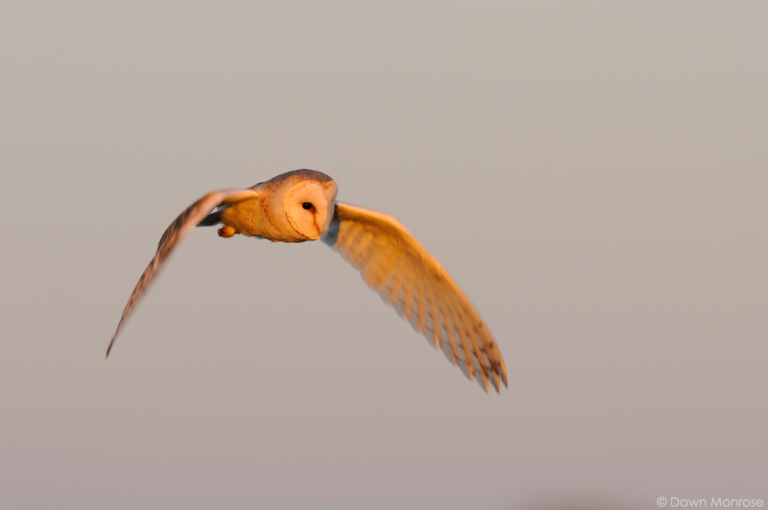
Barn owl, Tyto alba, in flight, hunting at first light, Norfolk, April

As I head for home, spring seems to be tentatively beginning. A pair of Long-tailed tits are prospecting for nesting materials and a trio of Treecreepers chase each other up a branch. There’s still no sign of the summer migrants yet, but I’m sure they’ll be arriving soon.

(Click images to view larger…)

If you like what you see, please consider sharing!

Share on Facebook+1Share on LinkedInShare on TumblrPin it on PinterestShare on TwitterShare via email

UK & Eire Natural History Bloggers

Otters

  • March 21, 2013 8:51 pm

Had a brilliant morning with the Otters, but first, a word to photographers planning to visit this location. If you are not aware of the Nature Photographers Code of Conduct, then please read it thoroughly HERE. This is the code of practice by which all nature photographers must abide, to protect the wildlife we love to photograph, and to protect ourselves as ethical photographers. The welfare of the subject is more important than the photograph.

Photographers please have respect for this location and your fellow photographers and wildlife watchers. Normal social rules and etiquette still apply – keep your distance and be patient. Do not muscle in on someone else’s photos – you don’t want to get exactly the same images as them anyway, do not get in the way of people watching, and do not chase the otters relentlessly up and down the river. The best photos can be achieved by sitting quietly and waiting for them to come to you. Please do not leave litter or disturb or annoy the local people.

Finally, and I cannot stress this final point enough: PLEASE DO NOT FEED THE OTTERS.  I have read online and witnessed some people feeding them – this is wholly unethical. Not only does this put the river system and otters at risk of ill health and disease (you do not know what parasites and bacteria might be present on the food), you are also endangering the otters lives. Feeding them encourages them to associate humans with food – but the otters cannot tell the difference between a person with a camera and a person with a gun. You are also putting yourself at risk of being bitten – otters have an extremely powerful bite (remember Terry Nutkins had part of two fingers removed by an otter) and again this puts the otters at risk of persecution. Imagine if one were to bite a child. The otters have already suffered a lot of bad publicity and despite the fact they are fully protected by law, there is still a small minority of people that wish them harm. Please give these wild animals the respect they deserve.

If everyone can behave responsibly and sensibly, then we will all be able to enjoy the presence of these very special creatures.

Now to the photos. An early start again this morning with a lovely companion, who really wanted to see the Otters. Sitting quietly by the river we observed some of the other river wildlife, including Grey Wagtail, Kingfisher and the long staying Black-bellied Dipper. After a long wait we were rewarded as the dog otter drifted gently past. He surfaced and dived, moving up river, so we gave him some space and then followed along behind. We had some fantastic views of this magnificent animal, and then as two other photographers joined us, we were able to watch him hunting. In the clear water we could see him below the surface, twisting his powerful body in the current, a curtain of silvery bubbles rising from his fur. An amazing experience.

There’s plenty of wildlife here to photograph:

Mallard, Anas platyrhynchos, female, duck, standing on riverbank, Norfolk,

Later, after the male Otter went off to bed, we took a stroll along the river. Ahead on the path a chap was standing with a video camera, so we held back, and then noticed an Otter on the path right in front of him – amazing! This time it was a female, and she was clearly on a mission heading downstream, moving very quickly. We circled around and set up to wait for her to appear, but instead of swimming along in the river as I expected, she was running along the bank. A delightful sight with as tail held high, she bounded and bounced along.

Otter, lutra lutra, female running along riverbank, Norfolk, March


Otter, lutra lutra, female on riverbank at base of tree, Norfolk, March

We moved back to where the other photographers had set up and warned them she was on her way. We all waited in anticipation, and she didn’t disappoint, giving us some wonderful views.

 Otter, lutra lutra, female shaking head, water drops, Norfolk, March

 Otter, lutra lutra, female on riverbank, Norfolk, March

An incredible experience once again with these beautiful animals, and also again, a great group of friendly people.


Further reading:

The Nature Photographers Code of Practice

Nature Photographers Network – Code of Conduct

The International Otter Survival Fund – Otter press release

The Mammal Society – Otter factsheet

Elliot Neep – How to photograph otters (Based on coastal otters, but much is relevant to river otters.)


Otters are strictly protected by the Wildlife and Countryside Act (1981) and cannot be killed, kept or sold (even stuffed specimens). They are given full protection under Schedule 5 of the Wildlife and Countryside Act – the restrictions on photographing otters at their places of shelter are exactly the same as those for nesting birds, meaning it is an offence to disturb them at their holt.

(Click images to view larger…)

If you like what you see, please consider sharing!

Share on Facebook+1Share on LinkedInShare on TumblrPin it on PinterestShare on TwitterShare via email

UK & Eire Natural History Bloggers

Not Otters

  • March 12, 2013 9:38 pm

Sometimes you can try too hard. My lovely boss let me have the day off (thanks!) and to make the most of every minute, and hoping to avoid other photographers, I was out at first light – first car in the car park.  Nothing doing. Retracing my steps up and down the rivers, still nothing. I did find some other wildlife though.

Mallard, Anas platyrhynchos, male, drake, on water in golden sunlight, Norfolk,

Muntjac deer, Muntiacus reevesi, in undergrowth, Norfolk

Egyptian Goose, Alopochen aegyptiacus, resting on river bank, Norfolk

 At 8.30am a trio of photographers arrived, and then a few more followed. I could read their minds before they opened their mouths to speak – are they here, have you seen them? I set off in the opposite direction but a photographer hurried past – ‘if you’re interested the otters have been seen further down’. I hesitated, do I join the crowd, or stay here with nothing to photograph. I followed along, after all, there weren’t as many people as last time. Arriving on scene I see a tail slide into the river, and a head pops up. The two youngsters are hunting, one catches a large fish and takes it into the undergrowth to eat. The other photographers follow their progress up and down the river, but I hang back. I dislike this chasing them up and down, it doesn’t feel right photographing like this, so I turn away. This is incredibly frustrating.

Despite the chill in the air and frost on the ground, in the sun it actually feels quite spring-like. Siskins are feeding in the alders by the river, Marsh tit’s are singing, somewhere close by a Green Woodpecker laughs. I sit for a while next to the fast flowing river, it’s so peaceful here, you wouldn’t believe you were so close to a town.

Jay, Garrulus glandarius, perched in tree in sunlight, Norfolk

Treecreeper, Certhia familiaris, Norfolk

Mallard, Anas platyrhynchos, female, on water in golden sunlight, Norfolk,

I head home, and return later in the afternoon. Walking slowly along to where I last saw them, but there’s nothing around. I retrace my steps for the umpteenth time. Again I meet another photographer who informs me there’s an otter heading this way. Again I hesitate, but I follow anyway walking back the way I came, this might be my last day off  for some time, I have to make the most of it.  They set up, and I move away and find my own spot. There’s a Kingfisher on the far side of the bank, a shining blue jewel of a bird. I watch him for a while, but suddenly the water swirls in front of me, could it be? A few bubbles pop up, then a broad whiskered head appears by the bank before disappearing again, rolling away. This time there’s no splashing, this is one of the adults, she moves from land to water with fluid ease, silently hunting. She bobs up again and glances at me, and there it is, that amazing moment, just the otter and me.

She moves off  back the way she came, and some friendly locals encourage me over and point her out. Everyone I spoke to today were so enthusiastic about these creatures, they are so proud to have them here, and lots of people were keen to share what they knew, where they’d seen them before and describe their amazing encounters. The other photographers invited me closer, and I gratefully accepted. This is much more civilised than at the weekend, everyone keeping their distance, waiting for the otter to come to them. I set up hoping she would come up the bank for some photos with a reasonably clean background. Instead she headed straight for me, too fast for me to track her, and too close to focus. She peered curiously at me, ‘hunfff’ she snuffled. My research suggests this means ‘I smell you’ – I know you’re there. I imitate and she looks at me, we repeat and she’s now just a couple of feet away. I just can’t believe it, an absolutely incredible experience. I haven’t got any decent photos, but right now it doesn’t matter. I’m sure I’ll be back to try again.

European otter, lutra lutra, on river bank under bridge, Norfolk,

A big thank you to the lovely friendly photographers I met today, thank you for not only your help, but for restoring my faith in human-kind!

(Click images to view larger…)

If you like what you see, please consider sharing!

Share on Facebook+1Share on LinkedInShare on TumblrPin it on PinterestShare on TwitterShare via email

UK & Eire Natural History Bloggers

Urban Otters

  • March 2, 2013 6:46 pm

For some weeks now, I’ve seen reports and amazing photographs of Otters in a town not too far away from me. Finally, I could no longer resist such a fantastic opportunity, and today I set out to find them. The Otter is an iconic mammal, shy and elusive, gracing our rivers once again after many years of persecution. But these guys are the new kids on the block, bold as brass, with attitude and charm in equal measure, they’ve swum their way into our urban environs.

Walking along the river footpath, I have a moment of uncertainty about the direction of the trail, when suddenly there’s a great big splash. Peering through the bushes I glimpse my first wild urban Otter, incredible. I see her shake out her coat and then dive right back in with another splosh of water. A photographer comes round the corner hurrying and struggling through the undergrowth trying to keep up. My senses come back to me and I hasten away from the action, they’re heading downstream and I’m already ahead of them, so I circle round a bend in the river and set up and wait.

European Otter, lutra lutra

What happened next, I could never have predicted. Many gardens back onto the river, and at the edge of this particular garden there were a group of chickens scratching through the leaves on the riverbank. The opportunistic Otters didn’t miss a trick, and leapt from the water onto the bank and gave chase, there was a lot of clucking as the panicking birds scattered out of the way of the Otter, as he pursued them back and forth. Cleverly, he slipped back into the water. One of the hens froze in fear, caught between the wrong side of the fence and the river and unable to see the predator, a fatal mistake. The Otter came silently and swiftly, propelled from the river by wide paws and thick tail, two bounds and he caught the hapless hen, who barely had time to react. Squealing and flapping hard she nearly broke free in a cloud of feathers, but the Otter dragged her to the water where she finally met her end.

European Otter, lutra lutra

An astonishing thing to witness, nature red in tooth and claw. A fine meal for the two Otters, but not so pleasant for the chicken’s unfortunate owner. Hopefully, with their preferred diet of fish, this isn’t a scene repeated too often.

The Otters were totally unconcerned by the human onlookers, and as more people joined the group they ate their fill, then had a swim and paused to dry off their fur and rest.

European Otter, lutra lutra

But that’s the only thing that spoils this for me. To my left, twelve cameras all set to ‘machine-gun-fire’, a barrage of shutter noise whenever the Otter moves. Call me a purist, but this isn’t wildlife photography. Not one of them is watching their back, thinking of wind-direction or stealth. For me, that’s wildlife photography at it’s best – watching and photographing an animal without it knowing you are there, and creating images different to anyone else. It’s not the Otter’s fault, they’re a modern mammal, adapting to the increasing urbanisation of their natural home. Perhaps I ought to get with the times too. But it’s great to see so many people taking an interest in our wildlife, it needs as many protectors and supporters as it can get. The Otter’s are unfazed by the attention, but I’ll be back at a quieter time.

Posing for the cameras…

European Otter, lutra lutra


Domestic chicken

Is it safe to come down yet?
(Click images to view larger…)

If you like what you see, please consider sharing!

Share on Facebook+1Share on LinkedInShare on TumblrPin it on PinterestShare on TwitterShare via email

UK & Eire Natural History Bloggers

Hush Wing

  • February 8, 2013 2:02 pm

It’s 7.30AM and it’s snowing heavily. I’m questioning my reasoning behind stepping outside with my camera this morning, but with my new found determination to do more photography this year, I know I have to. I’ve been watching the Barn Owl’s on the fen and I know they’ll be out hunting at this time of day, but in the snow? I settle down on the base of a tree and wait. The falling snow patters softly around me, and the swiftly moving clouds open to reveal a glimmer of light. White wings in the distance, and before I know it Mr Barn Owl is hunting in front of me.

Barn owl, Tyto alba, in flight at dawn, Norfolk, February

He swoops in silent flight and I watch, there’s nothing more mesmerising than the sight of a hunting Barn Owl wafting through the air. He floats away out of view and another snow shower moves through. After some time, a movement catches my eye, looks like Mrs Barn Owl is awake.

Barn owl, Tyto alba, perched in tree at dawn, Norfolk, February

She begins to hunt and is chased briefly by a Kestrel, she ignores the squawking falcon who starts his own hunt on flickering wings before being moved on by a pair of Carrion Crows. The Barn Owl glides past, this is my first photography session with them, and I was concerned about how they would react. I needn’t have worried though, both ignored me and hunted as normal, not even looking in my direction.

Barn owl, Tyto alba, in flight at dawn, Norfolk, February

She perches up as another snow shower approaches.  A jogger runs past and the owl and I watch, unconcerned. We’re both waiting, listening, watching the world, she high in the silver birch, me at the base of the oak. Does a Barn Owl stay out in the falling snow?

Barn owl, Tyto alba, perched in tree in falling snow, Norfolk, February

(Click images to view larger…)

If you like what you see, please consider sharing!

Share on Facebook+1Share on LinkedInShare on TumblrPin it on PinterestShare on TwitterShare via email

UK & Eire Natural History Bloggers

Snow Robin

  • February 3, 2013 4:50 pm

Here’s one from the garden back when it was snowy.

Robin, Erithacus rubecula, in snow, Norfolk, Winter

(Click images to view larger…)

If you like what you see, please consider sharing!

Share on Facebook+1Share on LinkedInShare on TumblrPin it on PinterestShare on TwitterShare via email

UK & Eire Natural History Bloggers

Slavonian Grebe

  • January 25, 2013 6:38 pm

Out practising with the new lens today, and decided to head to the fine city of Norwich. More specifically, Whitlingham Country Park. Despite being close to the hustle and bustle of the city, the park often attracts our more unusual winter wildlife. The local waterfowl proved to be great target training.

Mute Swan, Cygnus olor, adult preening, close up, graceful, Norfolk, Winter

A serene Mute Swan, that is, until it tries to steal your Jaffa cake… (don’t ask!)

Tufted duck, Aythya fuligula, female, swimming, Norfolk, Winter

Tufted duck, Aythya fuligula, female, swimming, Norfolk, Winter

These female Tufted ducks were more confiding than the black and white males.

Then I spotted the star of the show. Small, grey with a startling red eye. A first for me – an overwintering Slavonian Grebe.

Slavonian Grebe, Podiceps auritus, Norfolk, Winter, UK

There is a very small breeding population in the UK, but they are more often seen in the winter months around our coasts.

Slavonian Grebe, Podiceps auritus, Norfolk, Winter, UK

Slavonian Grebe, Podiceps auritus, Norfolk, Winter, UK

Slavonian Grebe, Podiceps auritus, Norfolk, Winter, UK

He seemed quite content feeding with the other larger birds, often getting lost in the throng, and lost to view. It was bitterly cold lying on the frozen ground waiting for him to resurface, but still great to watch a bird I’ve never seen before. Despite the fluffy appearance he never seemed to get wet!

The snow hasn’t cleared yet, providing a nice reflected uplighting in the dull conditions.

Greylag goose, Anser anser, feeding in snow, Norfolk, Winter

 
(Click images to view larger…)

If you like what you see, please consider sharing!

Share on Facebook+1Share on LinkedInShare on TumblrPin it on PinterestShare on TwitterShare via email

UK & Eire Natural History Bloggers

Happy New Year!

  • January 6, 2013 5:37 pm

Happy New Year to you all!

Despite the grey weather today, I just had to get out with the camera – the reason? Well a lovely shiny new lens!

Now the folks who know me will know I’m not that much of a ‘gear-head’ and I’m a firm believer in that it’s not what you’ve got, it’s what you do with it that counts. So for many years I’ve been using the Nikon Nikkor 500mm f4 P lens, and in fact the majority of the photos on my website were taken with this lens. This lens was produced in 1988 (I would have been about 4 years old!) and is manual focus only, it’s a fantastic bit of glass and was the only decent 500mm lens I could afford at the time. It’s served me very well over the years, but the manual focus and resulting quantity of missed shots was often frustrating, so I’ve been long overdue for an upgrade. Enter stage right my sleek new Sigma 500m f4.5 EX APO and all the other random letters lenses seem have attached. It’s autofocus! For the wildlife photographers reading, I went for the Sigma over the Nikon for several reasons, mainly that funds wouldn’t quite stretch to the Nikon (it’s waaay more expensive than the Sigma), but the image quality compares very favourably according to the reviews and the Sigma focuses slightly closer and is more compact and lighter than it’s Nikon counterpart. The Nikon has VR (Vibration reduction) and the Sigma doesn’t, but I didn’t consider that a good reason to spend all that extra money. So I overcame my brand faithfulness and went for the Sigma.

I haven’t had much of a chance to test it out properly yet, but after a brief session in the garden with the birds I’m thoroughly chuffed with it so far! Even with the grey conditions, it focuses super quickly and quietly and is beautifully sharp. I can’t wait to get out and try it properly, but for now:

Great tit, Parus major, perched on branch with lichen, Norfolk, January

(Click images to view larger…)

If you like what you see, please consider sharing!

Share on Facebook+1Share on LinkedInShare on TumblrPin it on PinterestShare on TwitterShare via email

UK & Eire Natural History Bloggers

Follow

Get every new post on this blog delivered to your Inbox.

Join other followers: