
Masons and Miners
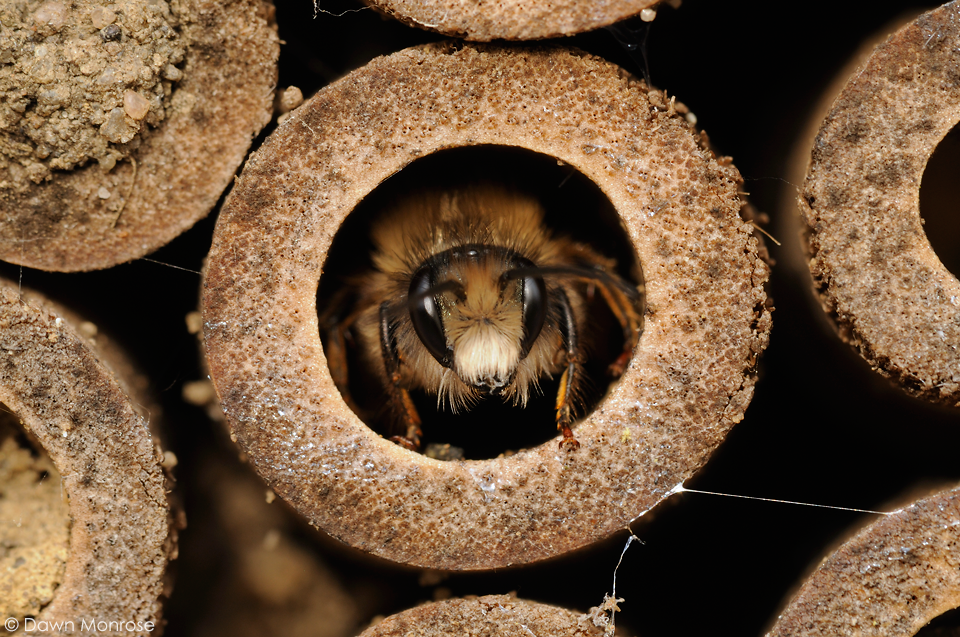
Just a quick update from me, Spring is in full swing now here in South Norfolk. Blue tit’s are nesting in the box on the back of the house, and the Hawthorn hedge at the bottom of the garden was in magnificient full bloom until the rains came over the last two days. Every year I’m fascinated by our wild Red Mason Bees, which have been using the bee nesters I installed on the east facing side of the house for several years now. They are solitary bees, each one creating an individual nest, but they come in great numbers to use the bee nesters now. Starting from around 8 bees when we first moved here to far too many to count now is fantastic to see as they are such important pollinators. I wonder if the neighbours either side are wondering why their apple trees have been producing such vast amounts of fruit over the last few years? I love listening to the constant hum of the bees going back and forth to their nests, and occasionally having a quick peek down one of the tubes to admire the pile of glorious yellow pollen that the bee has accumulated. The females are busy right now, each one provisioning their nest with pollen collected from the surrounding gardens, their rufous fur covered with sunshine yellow, as if they had been dipped in lemon sherbert. A few weeks ago though, the females were still tucked safely inside, and the newly emerged males were vying for the best spot, waiting for the girls to appear. I took this photo of a male waiting inside the nesting tube, warming himself in the early Spring sunshine.
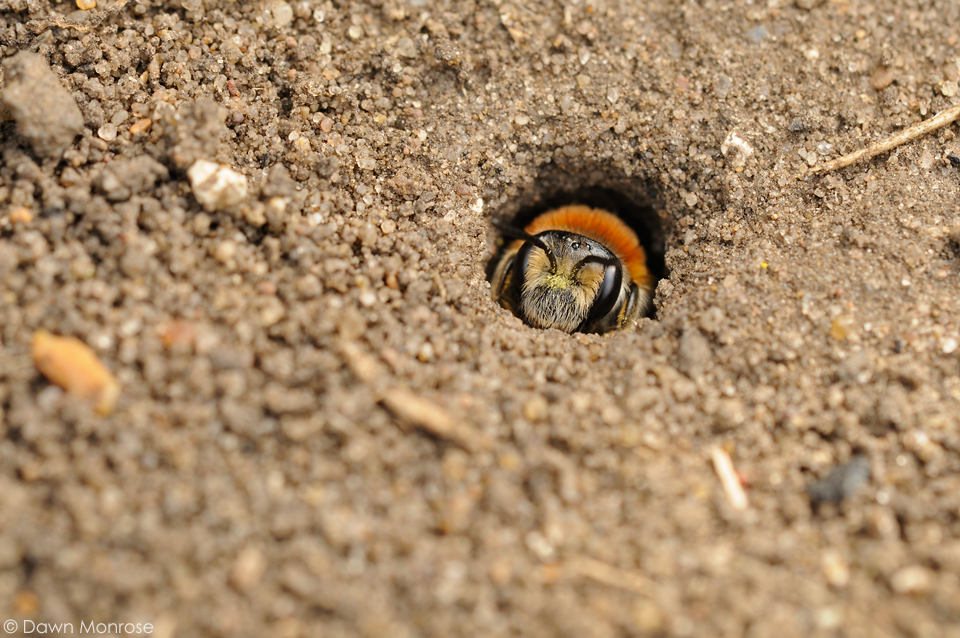
New for this year in the garden are the Mining bees. Much like the Mason bees, they are harmless solitary bees, and great pollinators of course too. As the name suggests, instead of nesting in holes in masonry, these little bees dig their own nest chambers underground, often resulting in a little hill of soil in the lawn with a hole in the middle of around 4mm diameter. These little bees are only about 8-11mm in length and prefer nesting in well drained soil. They are a little shyer than the Mason bees, retreating into their nest when you wander past, but with a little patience I was able to photograph this Early Mining bee basking in the sun at the entrance to her nest.
Although photography is my medium of choice I do occassionally dabble in video too, and this year I was able to film a male mason bee emerging from the nester for the first time. You can take a look at that video here: https://youtu.be/FsDcjPGzLFU
(Click images to view larger…)
If you like what you see, please consider sharing![social_share/]

Follow me on Facebook: https://www.facebook.com/DawnMonroseNaturePhotography
Amazing pics Dawn, bees are such wonderful beautiful creatures, you are very fortunate to have them in your garden. The neighbours should be very grateful!
Thanks Jan!
Very interesting and a really good video.
Thanks Rob!